
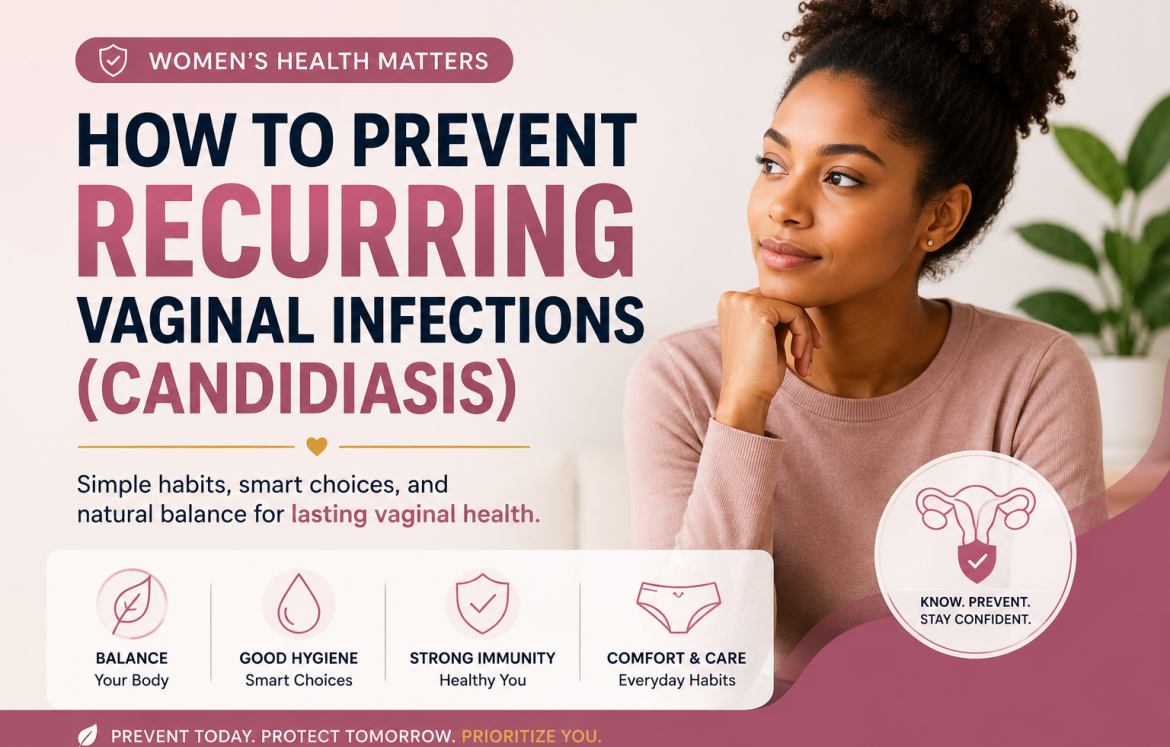
How To Prevent Recurring Vaginal Infections (Candidiasis)
Let me be honest with you, this is the kind of topic most people scroll past quickly or whisper about in low tones. But I’m going to talk about it plainly, because I wish someone had done that for me years ago.
I remember sitting in my doctor’s office for what felt like the hundredth time, frustrated and a little embarrassed. I had just gotten over a yeast infection, or so I thought, and barely two weeks later, it was back. The itching, the discomfort, the whole ordeal. I kept asking myself, “What am I doing wrong?”
If you’ve ever been in that position, I want you to know something right now: you are not alone, and you are not dirty. Recurring vaginal yeast infections, medically known as candidiasis, are incredibly common, and the good news is that there is a lot you can do to stop them from coming back. I learned this the hard way, so you don’t have to.
Let me walk you through everything I’ve learned.
What Is Candidiasis, Really?
Before we talk about prevention, let’s make sure we’re on the same page about what’s actually happening in your body. Your vagina is home to a delicate community of bacteria and fungi that work together to keep things healthy and balanced. One of those organisms is a yeast called Candida albicans. Under normal circumstances, it’s completely harmless; it lives there quietly, and your body keeps it in check.
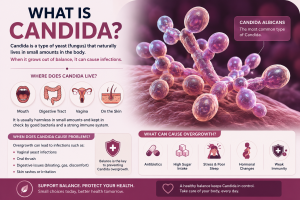
The problem starts when something disrupts that balance. When the “good” bacteria in your vagina (mainly Lactobacillus) decrease, Candida seizes the opportunity to grow out of control. That overgrowth is what we call a yeast infection or candidiasis.
The symptoms are hard to miss: intense itching, a thick white discharge that sometimes looks like cottage cheese, redness and swelling around the vaginal area, and a burning sensation, especially when you urinate or have sex.
A single yeast infection is common and usually easy to treat. But when they keep coming back, four or more times in a year, that’s what doctors call recurrent vulvovaginal candidiasis (RVVC), and that’s what I want to help you address today.
Why Does It Keep Coming Back?
This was the question I desperately needed answered. I treated the infection every time it appeared, but I never addressed why it kept showing up. Does this sound familiar?
Here are the most common culprits:
Antibiotics: This one surprised me when I first learned about it. Antibiotics are meant to kill harmful bacteria, but they don’t discriminate, they also wipe out the good bacteria in your vagina. When those protective bacteria are gone, Candida has room to grow freely. If you’ve noticed that your infections tend to follow a course of antibiotics, this could be your biggest trigger.
A High-Sugar Diet: Yeast feeds on sugar. It’s that simple. When your diet is high in refined sugars, sodas, sweets, white bread, pastries, you’re essentially creating an environment where Candida loves to thrive. I personally noticed a huge difference when I cut back on sugar. It wasn’t easy at first, but it was worth it.
Tight or Synthetic Clothing: I used to live in tight jeans and synthetic underwear without giving it a second thought. But those fabrics trap heat and moisture down there, and moisture is exactly what yeast needs to multiply. Your vagina needs to breathe, and some of your wardrobe choices might be suffocating it.
Scented Products: Those scented soaps, feminine washes, perfumed toilet paper, and scented pads? They may smell nice, but they are doing your vagina no favors. These products disrupt the natural pH balance of your vagina, killing off the good bacteria and leaving you vulnerable to infection.
Hormonal Changes: Your hormones play a big role in vaginal health. Many women notice more frequent yeast infections around their menstrual cycle, during pregnancy, or when they start or stop hormonal contraceptives. Estrogen in particular can encourage yeast growth. If your infections seem tied to your cycle or a medication change, hormones could be a major factor.
Stress? Yes, stress. When you’re constantly under pressure, your immune system weakens, making it harder for your body to keep Candida in check. I know life gets busy, but this was a wake-up call for me to take my mental health more seriously, not just for my peace of mind, but for my physical health too.
Sexual Activity: While yeast infections are not sexually transmitted, sex can sometimes trigger one. Friction can irritate the vaginal lining, and if your partner has Candida on their skin (which can happen), it can be transferred during intercourse.
What I Changed That Actually Made a Difference
Now here’s the part I really want you to pay attention to, the practical stuff that I actually tried and that genuinely worked for me. I’m not going to give you a list of miracle cures. I’m going to tell you what helped me, based on real lifestyle changes.
I switched to cotton underwear: This feels like such a small thing, but it made a noticeable difference. Cotton is breathable and absorbs moisture, which keeps the vaginal area dry and less hospitable to yeast. I swapped out my synthetic, tight-fitting underwear for loose cotton ones, and I stopped wearing underwear to bed altogether to allow airflow at night.
I cut back on sugar and refined carbs: I didn’t go on a strict diet, but I became more mindful. I reduced my intake of sugary drinks, white bread, and processed snacks. I replaced them with more vegetables, whole grains, and lean proteins. Within a few months, the frequency of my infections dropped significantly.
I stopped using scented feminine products: I replaced my scented soap with plain, unscented soap, and I only use it on the outside of my vagina, never inside. The vagina is self-cleaning. It doesn’t need fancy washes. It just needs you to leave it alone and let it do its job.
I started changing out of wet clothes immediately: whether it was a sweaty workout or a swim, I made it a rule to change out of damp clothing as quickly as possible. Sitting in wet swimwear or sweaty gym leggings creates the perfect warm, moist environment for yeast to thrive.
I asked my doctor about probiotics during antibiotic treatment: the next time I had to take antibiotics, I spoke with my doctor and started taking a probiotic supplement alongside them. This helped replenish the good bacteria that the antibiotics were wiping out, and I didn’t get a yeast infection afterward, a first for me.
I became more intentional about managing stress: I started doing gentle yoga a few times a week and became more protective of my sleep schedule. I’m not going to pretend I’m perfectly zen now, but making even small changes to reduce my stress load seemed to help my body maintain better balance overall.
The Role of Probiotics and Gut Health
I’ll be honest, I didn’t fully understand the connection between my gut and my vagina until I started reading more about it. But it turns out, they are deeply linked.
The same beneficial bacteria, “Lactobacillus,” that protects your vagina also lives in your gut. When your gut is unhealthy, it can affect the balance of bacteria throughout your whole body, including in your vagina.
Probiotics are live bacteria that help restore and maintain that balance. You can get them through food, think yogurt with live cultures, fermented foods, or through supplements.
Look for probiotic supplements that specifically contain Lactobacillus rhamnosus or Lactobacillus reuteri, as research has shown these strains may be especially beneficial for vaginal health. That said, always check with your doctor before starting any new supplement, especially if you have other health conditions.
When to See a Doctor, Please Don’t Skip This Part
I know it can feel awkward or even unnecessary to bring this up with a doctor, especially if you’ve been dealing with it for years and feel like you already know what it is. But I want to encourage you to please make that appointment.
Here’s why: recurring yeast infections can sometimes be a sign of an underlying condition that needs attention. Uncontrolled diabetes, for example, raises blood sugar levels, which feeds yeast. A weakened immune system, certain medications, and even hormonal disorders can all contribute to recurring infections.
Additionally, not every infection is a yeast infection. Bacterial vaginosis and sexually transmitted infections can present with similar symptoms. If you’re self-diagnosing and self-treating without confirmation, you might be missing the actual problem and delaying proper treatment.
If you’ve had four or more yeast infections in the past year, please see your doctor or gynecologist. There are longer-term antifungal treatment plans specifically designed for recurrent cases, and your doctor can help identify whether an underlying cause needs to be addressed.
A Gentle Word on Self-Care and the Embarrassment We Feel Talking About it
I want to take a moment here, because I think it matters.
So many of us feel embarrassed talking about vaginal health. We suffer in silence, buy over-the-counter treatments at the pharmacy and hope no one sees us, and never breathe a word about it to anyone. I’ve been there.
But let me say this clearly: having a yeast infection, even repeatedly, does not mean you are unclean, irresponsible, or unhealthy. It means your body’s internal balance has been disrupted, and it needs some support. That’s it.

Taking care of your vaginal health is not shameful. It is a normal, important part of taking care of your whole self. The more openly we talk about these things with our friends, our partners, and our doctors, the sooner we can get the right information and the right help.
You deserve to feel comfortable in your own body. And with the right information and a few consistent habits, you absolutely can.
Quick Recap: Your Prevention Checklist
Here is a simple summary of the habits that can help prevent recurring yeast infections:
- Wear breathable cotton underwear; go commando at night when possible
- Avoid tight-fitting pants or synthetic fabrics for extended periods
- Cut back on sugar and refined carbohydrates
- Skip scented soaps, washes, and feminine hygiene sprays
- Change out of wet or sweaty clothes quickly
- Wipe front to back after using the bathroom
- Take probiotics, especially during and after antibiotic treatment
- Manage stress through rest, exercise, or whatever works for you
- See your doctor for recurring infections or unusual symptoms
I started writing about this topic because I was tired of searching for honest, practical information and coming up empty. What I found through my own experience, and through a lot of reading, is that preventing recurring yeast infections is very much possible, but it requires a holistic approach. It’s not just one thing. It’s a combination of diet, lifestyle, hygiene habits, and working with your doctor.
If you’ve been struggling with this, please know that things can get better. It took me time, a few doctor’s visits, and a willingness to make some lifestyle changes, but I got there. And you can too.
Still Treating the Same Yeast Infection Over and Over Again?
Read this before you spend another dollar on antifungal cream.
If you treated a yeast infection this month, and last month, and the month before that…
You don’t have a treatment problem.
You have a prevention problem.
And no cream, pill, or suppository is going to fix that.
I know how exhausting this cycle feels. The itching comes back. You run to the pharmacy. You treat it. You feel better for maybe two weeks. Then it’s back again, like it never left. You start wondering if something is seriously wrong with you.
Nothing is wrong with you. You just haven’t been given the right information yet.
Here’s What Nobody Is Telling You
Every woman who keeps getting yeast infections is caught in the same trap. She treats the symptoms, but nobody ever shows her how to stop the infection from coming back in the first place.
So she spends month after month buying treatments, feeling temporary relief, and then starting the whole painful cycle all over again.
The itching. The discomfort. The embarrassment of yet another pharmacy run. The quiet frustration of a body that feels like it’s working against her.
Sound familiar?
What if I told you that breaking this cycle doesn’t require expensive prescriptions, complicated routines, or a complete lifestyle overhaul?
What if a few simple, affordable changes, starting today, could give you the lasting relief you’ve been searching for?
That’s exactly what my PDF guide, Recurring Vaginal Infections (Candiasis): A Complete Guide To Understanding, Preventing and Managing Candidiasis Naturally and Medically, is designed to do.
This is a focused, straight-talking guide for women who are tired of suffering in silence and ready to take back control of their bodies.
Inside, you will discover:
The real reason your infections keep coming back and why treating the symptoms alone will never be enough. Once you understand this, everything changes.
The diet changes that actually work: yeast feeds on sugar, and when you understand how to starve it, you stop giving it the fuel it needs to take over your body.
The underwear rule that changes everything: it sounds almost too simple, but what you wear down there has a bigger impact on your vaginal health than most people realize.
How to protect yourself during antibiotic treatment: antibiotics are one of the biggest triggers for yeast infections, but most doctors never tell you what to do about it. This guide does.
The probiotic truth: not all probiotics are created equal. Learn exactly which strains work specifically for vaginal health, when to take them, and how much you actually need.
A simple daily checklist: no complicated routines, no expensive products. Just a handful of small habits that take less than five minutes a day and can keep infections away for good.
The warning signs you should never ignore: sometimes recurring infections signal something deeper going on in your body.
This guide tells you exactly when it’s time to see a doctor and what to ask for.
👉 Click Here to Get Instant Access — Under $10
Instant download. Read it on your phone, tablet, or computer. Start today.
This guide is for you if…
You have had two or more yeast infections in the past year. You are tired of spending money on treatments that only work temporarily. You want to actually understand what is happening in your body, not just mask the symptoms. You are done feeling uncomfortable, embarrassed, and frustrated, and you want a simple, affordable solution you can start using today
I’d love to hear from you. Have you dealt with recurring yeast infections? What has helped you? Drop a comment below, your experience might be exactly what someone else needs to read today.
And if this article helped you, please share it with a friend who might need it. We’re all in this together.
Take care of yourself always.
Disclaimer: This article is for informational purposes only and is not a substitute for professional medical advice, diagnosis, or treatment. Always consult your doctor or qualified healthcare provider with any questions you may have regarding a medical condition.