

Copywriting For Beginners | A Practical Guide To Building A High Income Skill
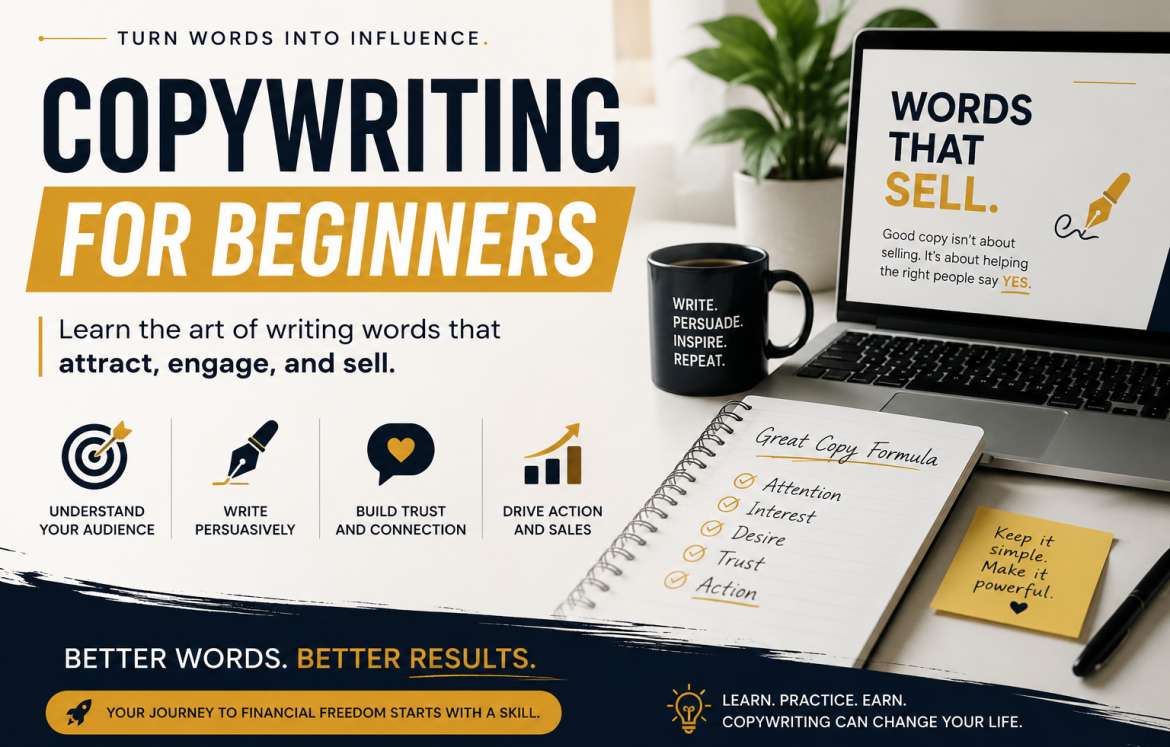
Every day, you are surrounded by words that are trying to influence you.
A simple sentence on a website can convince you to buy a product. A short email can make you sign up for a service. A powerful advertisement can make you stop scrolling and pay attention.
Words are everywhere, and words create emotions. Words build trust. Words tell stories. And most importantly, the right words can inspire people to take action.
Think about the last time you bought something online. Maybe it was a phone, a course, clothing, a book, or even a simple household item. Before you clicked the “buy now” button, something influenced your decision.
Maybe it was the headline that caught your attention.
Maybe it was the description that explained how the product could solve your problem.
Maybe it was a story from another customer that made you believe you could achieve the same result.
That is the power of copywriting.
Copywriting is the art and science of using words to persuade people. It is the skill behind successful advertisements, sales pages, emails, websites, product descriptions, and social media campaigns.
Every successful brand uses copywriting.
From small businesses trying to attract their first customers to global companies building millions of loyal buyers, words play a major role in creating connections and driving sales.
The interesting thing is this: you do not need to be a professional writer, a marketing expert, or someone with years of experience to learn copywriting.
You can start from zero.
You can learn how people think, what motivates them, and how to communicate ideas in a way that creates value.
In today’s digital world, copywriting has become one of the most valuable skills anyone can develop.
Whether you want to start freelancing, grow your business, market your products, build a personal brand, or simply improve your communication skills, learning copywriting can open many opportunities.
This beginner’s guide will introduce you to the world of copywriting, explain how it works, and show you how you can start developing this powerful skill.
What Is Copywriting?
Copywriting is writing that is created with one main purpose: To influence someone to take action
That action could be buying a product, signing up for a newsletter, downloading a guide, booking a service, contacting a business, or supporting a brand.
A copywriter creates words that guide people from curiosity to decision.
For example:
A normal sentence:
“Buy our skincare product.”
A copywriting approach:
“Discover smoother, healthier-looking skin with a gentle skincare formula designed for your daily routine.”
The second version focuses on the customer’s desire and experience.
Good copywriting answers important questions:
Why should I care?
How will this help me?
Why should I trust this brand?
Why should I take action now?
A copywriter understands that people do not simply buy products; people buy solutions.
Someone does not buy a fitness program because they want a PDF or video lessons.
They buy because they want confidence, better health, energy, or a transformation.
Someone does not buy a financial course because they want information.
They buy because they want security, freedom, and better opportunities.
Copywriting connects the product with the emotion behind the purchase.
What Do Copywriters Do?
Copywriters create different forms of persuasive content, including:
Website pages
Sales pages
Email campaigns
Advertisements
Social media posts
Product descriptions
Landing pages
Brand messages

Their job is to understand the audience and communicate in a way that makes the audience feel understood.
A great copywriter thinks:
“What does this person need?”
“What problem are they trying to solve?”
“What words will help them trust this solution?”
Copywriting vs. Content Writing: What Is the Difference?
Many beginners confuse copywriting with content writing.
Although they are connected, they have different goals.
Content writing focuses mainly on educating, informing, and entertaining.
Examples:
* Blog articles
* Tutorials
* Educational guides
* News articles
Copywriting focuses on persuasion and action.
Examples:
* Advertisement headlines
* Sales pages
* Promotional emails
* Product descriptions
A content writer may write:
“10 Benefits of Drinking More Water Every Day.”
A copywriter may write:
“Feel More Energized Every Morning With This Simple Daily Habit.”
Both are valuable, but the intention is different.
Content attracts attention.
Copy converts attention into action.
Why Copywriting Is a High-Income Skill
One reason copywriting is so valuable is because businesses understand one important truth: Good words make money.
A business can have an amazing product, but if nobody understands its value, sales will suffer.
This is why companies invest in skilled copywriters.
A great copywriter helps businesses:
* Attract customers
* Increase sales
* Build trust
* Explain their products clearly
* Create stronger marketing campaigns
In the digital age, every business needs communication.
A company website needs words.
An online store needs words.
An advertisement needs words.
An email campaign needs words.
Words are the bridge between a business and its customers.
How Beginners Can Make Money With Copywriting
Many people start copywriting as a freelance skill.
They learn the basics, practice writing, create samples, and offer their services to businesses.
Beginners can work with:
* Small business owners
* Online coaches
* E-commerce brands
* Bloggers
* Entrepreneurs
* Marketing agencies
The exciting part is that copywriting is a skill-based career.
Your success depends on your ability to understand people and communicate effectively.
You do not need expensive equipment.
You do not need a large office.
You need knowledge, practice, and consistency.
The Psychology Behind Words That Sell
Copywriting is not just about writing beautiful sentences.
It is about understanding human behavior.
People make decisions based on emotions and justify them with logic.
A powerful copywriter understands this.
Understanding Customer Problems
Before writing anything, ask:
What problem does this person have?
What frustration are they experiencing?
What result do they want?
For example:
A person buying a meal plan is not only looking for recipes.
They may want confidence.
They may want to feel healthier.
They may want to change their lifestyle.
Understanding the deeper motivation helps you write better copy.
Creating Desire
Good copy helps people imagine a better outcome.
Instead of focusing only on features, focus on transformation.
Feature:
“This course has 20 lessons.”
Benefit:
“Learn step-by-step strategies that help you build a valuable skill from the comfort of your home.”
The benefit creates desire because it shows the result.
Building Trust
People buy from people and brands they trust.
Trust can be created through:
* Testimonials
* Stories
* Proof
* Transparency
* Clear communication
A customer wants to feel confident before making a decision.
Your words should reduce the doubt of the customers.
The Power of Storytelling
Stories are one of the strongest tools in copywriting.
A story creates connection.
For example:
Instead of saying
“I created this guide to teach copywriting.”
You could say:
“I created this guide after seeing many beginners struggle to understand how online writing works and how they could turn words into opportunities.”
The second version creates emotion because people remember stories.
Essential Skills Every Beginner Copywriter Needs
1. Research Skills
Great copywriters are great researchers.
Before writing, they study:
* The audience
* The product
* Competitors
* Customer reviews
* Market needs
Research helps you write words that feel personal.
2. Understanding Your Audience
Your audience should always come first.
You need to know:
Who are they?
What do they want?
What are they afraid of?
What motivates them?
The more you understand people, the better your writing becomes.
3. Writing Powerful Headlines
Your headline determines whether people will continue reading.
A strong headline creates curiosity.
Examples:
Weak headline: “Learn Copywriting.”
Stronger headline: “Discover How Beginners Can Use Words To Attract Customers And Create Income Opportunities.”
4. Creating Strong Offers
People respond to value.
A strong offer clearly explains the following:
What they get.
Why it matters.
How it helps them.
5. Editing and Improving
Professional writers understand that first drafts are rarely perfect; you just have to keep editing to improve and make great copies, remove unnecessary words, make sentences clearer, and strengthen your message.
Common Copywriting Mistakes Beginners Make
Writing Only About Features
Customers care about results; do not only explain what something is. Explain why it matters.
Ignoring The Audience
Writing without understanding your reader creates weak messages; always write for a specific person.
Using Boring Headlines
If your headline does not create interest, people may never read the rest.
Trying To Sound Too Complicated
Simple words often create the strongest impact. Good copy is always clear.
Forgetting A Call-To-Action
Every piece of copy should guide people.
Tell them what to do next.
Examples:
“Download your free guide today.”
“Start learning now.”
“Get access instantly.”
Different Types of Copywriting
Website Copy
Website copy helps visitors understand a brand and take action.
Example:
A homepage explaining a service and encouraging visitors to contact the company.
Sales Pages
Sales pages are designed to sell a product, service, or course. They combine storytelling, benefits, proof, and persuasion.
Email Copywriting
Emails help businesses build relationships and encourage action.
A good email feels personal, not robotic.
Social Media Copy
Social media copy captures attention quickly. It must be short, engaging, and memorable.
Advertising Copy
Ads need powerful words because they compete for attention. A strong advertisement is intended to communicate value quickly.
Product Descriptions
A good product description helps customers imagine owning and using the product.

How To Start Your Copywriting Journey As A Beginner
Step 1: Learn The Basics
Understand:
* Headlines
* Customer psychology
* Persuasion
* Storytelling
* Marketing principles
Step 2: Practice Writing
Write every day.
Rewrite advertisements.
Create sample sales pages.
Practice different styles.
Step 3: Study Successful Examples
Analyze:
* Websites
* Emails
* Advertisements
Ask:
Why does this work? What emotion does it create?
Step 4: Build A Portfolio
Create examples even if you have no clients. Showcase what you can do.
Step 5: Find Opportunities
Look for businesses that need help, offer value, and keep improving yourself.
The Future Of Copywriting
Many people wonder if AI will replace copywriters. It’s true that technology is changing the industry, but human understanding will always matter. AI can help create words, but humans understand emotions, experiences, and stories. The best copywriters of the future will combine creativity, psychology, and technology. Copywriting will continue to be valuable because businesses will always need a way to connect with people.
Ready To Learn How To Write Words That Sell?
Copywriting is more than just writing; it is the ability to understand people, communicate value, and create opportunities. Whether you want to build a career, grow your business, or develop a powerful digital skill, learning copywriting can change the way you communicate forever. But starting can feel overwhelming.
You may wonder:
Where do I begin?
What should I learn first?
How do I write words that actually persuade people?
That is exactly why I created
“Words That Sell: The Beginner Copywriter’s Blueprint”
This beginner-friendly PDF guide is designed to help you understand the foundations of copywriting without confusion.
Inside, you will learn the principles, techniques, and strategies that can help you start writing better copy with confidence.
Instead of wasting months trying to figure everything out alone, this guide gives you a clear roadmap.
If you are serious about improving your writing skills, attracting opportunities, and learning how powerful words can create results, this guide is your next step.
Your journey into copywriting starts with one decision because every day, you are surrounded by words that are trying to influence you.
Click below and get your copy of “Words That Sell: The Beginner Copywriter’s Blueprint” today.
Your words have value; now it is time to learn how to use them. Practice the skill. Master the skill.