
Red Flags You Should Never Ignore in a Relationship: Signs You Need to Pay Attention To
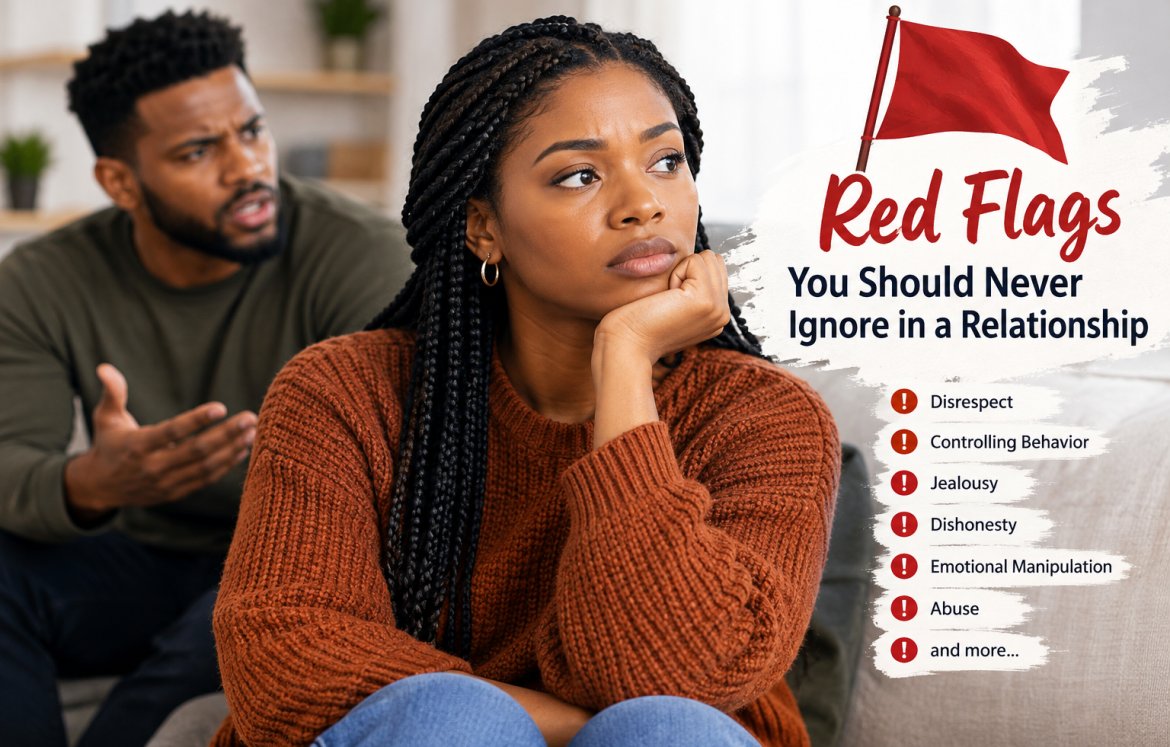
One thing that comes to mind when I think of relationships is how simple it is to ignore warning signs when you are in love. Sometimes we get so close to someone that we start to justify their actions. We persuade ourselves that if we love our spouse enough, they will change, that things will get better, or that they are just going through a tough moment.
I can see how this could occur. You naturally want to see the best in someone you love. You recall the lovely times you spent together, the vows they made, and the future you both envisioned. It might be difficult to give up on that ideal, particularly if you have dedicated time, effort, feelings, and occasionally even money to the connection.
However, I want you to know that loving someone does not imply that you should overlook actions that cause you pain and hurt you.
You should be able to grow, express yourself, feel appreciated, and have emotional stability in a healthy relationship. Every marriage has arguments, and no relationship is flawless. But there’s a distinction between typical marital problems and persistent behavior that undermines your self-esteem, contentment, or sense of security.
I want to talk about the warning signs in a relationship that you should never overlook. My intention is not to make you suspicious of everyone you encounter or to push you to break up with someone on a minor infraction. Rather, I want to assist you in identifying harmful patterns, comprehending the significance of them, and making choices that safeguard your mental wellness.
These warning indicators should be taken into consideration whether you are dating, engaged, married, or just getting to know someone.
1. Disrespect Disguised as Jokes
Disrespect is one of the first warning signs that you should never overlook, in my opinion.
Sometimes a partner will make fun of you and then say they were just kidding. They could make fun of your looks, intelligence, upbringing, financial status, family, or personal hardships. They may tell you that you are too sensitive or that you can’t handle a joke when you express your discomfort.
I want you to realize that humiliation shouldn’t be justified by humor.
Both partners should be able to laugh together in a healthy relationship without one person being singled out all the time. Your partner can disagree with you without making you feel inferior, but they don’t have to agree with everything you say.
Observe your partner’s behavior toward you in public. Do they make you feel uncomfortable amongst friends? Do they divulge personal information to make others laugh? When you argue, do they take advantage of your weaknesses?
Even though these actions might not seem like much at first, persistent disrespect can gradually lower your self-esteem.
A person who truly cares about you should, in my opinion, take your sentiments seriously. A respectful spouse should be open to hearing you out and trying to make amends if you tell them that a certain joke bothers you.
2. Controlling Behavior
A significant warning sign is a partner who seeks to dominate every aspect of your life.
Controlling conduct may appear to be love or care in the early stages of a relationship. Your spouse may claim that they are concerned about you and want to know where you are. They can insist on looking at your phone since they say they have nothing to conceal and they want the same in return.
But dominating someone is not the same as caring about them.
You might be told what to wear, who to talk to, where to go, or which people to cut ties with by a controlling partner. When you make decisions on your own or when they require you to get permission before undertaking everyday tasks, they could get upset.
You can eventually start to feel like you need approval for everything.
I want you to keep in mind that being in a relationship does not need you to compromise who you are. You are still free to pursue your personal hobbies, professional aspirations, friendships, and personal time.
Mutual respect and trust are essential components of healthy relationships. They don’t need one person to dominate the other. Take your partner’s actions seriously if they frequently limit your independence or use threats and rage to get you to comply.
3. Unfounded Accusations and Constant Jealousy
Another problem that can damage a relationship is extreme jealousy.
Relationships can be a little insecure, especially when people have been disappointed in the past. How those emotions are managed is what counts.
You should pay notice if your partner frequently accuses you of cheating without any justification, questions every conversation you have with someone else, or becomes upset whenever you get out with others.
Because you don’t want another fight, you can find yourself continuously explaining innocent situations, demonstrating where you’ve been, or avoiding routine activities.
This is emotionally draining.
Jealousy is sometimes misinterpreted as evidence of love. They think that when someone becomes overly possessive, it’s a sign that they can’t handle losing them.
However, I think love should be based on confidence rather than on suspicion all the time.
Without making you feel terrible about something you haven’t done, your partner can express their fears. You should be able to talk about boundaries and issues without making the partnership become a never-ending investigation.
Jealousy is no longer a minor relationship problem if it is used as an excuse to watch over, isolate, threaten, or dominate you.
4. Dishonesty and Repeated Lying
One of the cornerstones of a successful partnership is trust. Even straightforward circumstances can become difficult without it.
A relationship is not always irreparably damaged by a single falsehood. People make mistakes, and occasionally they conceal things out of fear of the repercussions. But persistent dishonesty is not the same.
You should pay attention if your partner frequently fabricates stories, withholds crucial facts, lies about important issues, or makes unfulfilled promises.
You may find that the explanations don’t always make sense. There’s always an excuse when you ask questions. You can eventually start to doubt your own judgment.
Even when the truth is difficult, I think it’s important to be honest.
Instead of constantly fabricating tales to evade accountability, a trustworthy spouse should be prepared to accept responsibility for their deeds.
Observe what transpires when a lie is exposed. Does your partner try to reestablish trust, acknowledge the truth, and provide a real apology? Or do they keep lying, accuse you of discovering it, and demand that you move on right away?
It takes time and regular action to rebuild trust. Words alone are not enough.
5. Refusing to Take Responsibility for Mistakes
In a relationship, nobody is perfect. Everybody has times when they act emotionally, speak carelessly, or make choices that cause harm to a loved one.
Our readiness to take accountability is what counts.
A partner who constantly finds someone else to blame is one warning sign that I would advise you to be aware of. Every time something goes wrong, it’s either your fault, their friend’s fault, their family’s fault, or the outcome of uncontrollable events.
They might never truly apologize. Even after they apologize, they immediately add, “But you made me do it.”
This isn’t true accountability.
A genuine apology admits the wrongdoing, accepts its consequences, and demonstrates a desire to improve. It doesn’t make the hurt person’s emotions the primary issue.
For instance, if your partner insults you during a fight, they ought to be able to acknowledge that what they said was inappropriate without maintaining that you were deserving of the offense.
When both parties are able to own up to their mistakes and grow from them, I think partnerships become stronger.
It might be time to consider whether the effort is genuinely reciprocated if you are constantly the one offering an apology, making concessions, and attempting to mend the relationship.
6. Emotional Manipulation and Gaslighting
Emotional manipulation is a serious red flag because it might induce you to question your own emotions, memories, and judgment.
To achieve their goals, a manipulative spouse may employ emotional pressure, silence, fear, or guilt. When you disagree with them, they may make you feel selfish for setting fair boundaries, remind you of all they have done for you, or threaten to leave.
A more precise pattern known as “gaslighting” occurs when someone consistently attempts to cast doubt on your understanding of reality. When you voice valid worries, they might, for instance, continually tell you that you are dreaming, insist that things happened differently, or dispute what they explicitly stated.
Eventually, rather than analyzing their actions, you may begin to doubt yourself.
“Maybe I am the problem,” or “Maybe I really am too sensitive,” are possible thoughts.
I want you to keep in mind that disagreements do not always indicate that someone is trying to control you. Individuals may misremember events or misinterpret one another.
The issue is a recurring practice of rejecting, misrepresenting, or discounting facts in a way that erodes your self-esteem and gives the other person authority.
Your emotions should be acknowledged, and maintaining a harmonious relationship shouldn’t require you to give up your sense of reality.
7. Verbal, Emotional, or Physical Abuse
One of the most crucial warning signs to identify is this one.
Physical assault is not always the first step in abuse. Insults, financial control, sexual coercion, threats, humiliation, intimidation, and intentional attempts to instill fear are all examples of it.
A spouse who frequently uses physical force against you, destroys your possessions, threatens to hurt you, or calls you derogatory names is exhibiting conduct that should never be written off as a typical marital dispute.
After an abusive event, the victim may cry, offer an apology, purchase gifts, or make a vow that it won’t happen again. They might place the blame on wrath, envy, stress, or alcohol.
An apology does not make abuse go away, even though people can change when they truly accept responsibility and get the care they need. Your safety and long-term transformation are what count.
I want you to know that, regardless of what transpired during a disagreement, you do not deserve to be mistreated.
Put your safety first if you’ve been threatened, are afraid of your spouse, or are experiencing physical harm. Think about contacting a local support service or someone you can trust. Get in touch with your local emergency services if you are in imminent danger.
You don’t have to wait for things to get worse before seeking help.
8. Lack of Communication and the Silent Treatment
In any healthy relationship, communication is crucial.
Even though partners won’t always agree, they should be able to politely voice their concerns. When something goes wrong, both parties should be given a chance to voice their concerns and try to find a solution.
When one partner consistently avoids communication, disregards every effort to find a solution, or punishes the other by remaining silent, it is a warning sign.
It’s critical to realize that pausing during an argument is not inherently harmful. Before starting a difficult conversation, people may require some time to calm themselves.
Whether the break is politely announced and followed by a sincere attempt to find a solution makes a difference.
A partner might say, “I am upset right now,” for instance. When we’re both calmer, can we discuss this later?”
That’s not the same as purposefully neglecting you for days in order to make you feel bad or coerce you into giving up.
I think that openness, tolerance, and a will to listen are necessary for effective communication. You shouldn’t have to constantly beg someone to talk to you about issues that are important to both of you.
9. Isolation From Friends and Family
A spouse who gradually distances you from those who are important to you is another warning sign.
They can initially claim that your pals are a negative influence. Afterward, they may grow irate anytime you go to see relatives, dissuade you from going to significant occasions, or start disagreements when you make arrangements without them.
You might eventually stop dating for no other reason than that handling your partner’s response is too taxing.
Isolation can be harmful since it limits your options for assistance when relationship issues worsen.
Naturally, not all worries regarding friends or family members are dominating. A partner may occasionally observe truly detrimental behavior in a loved one. Whether they respectfully voice their concerns while letting you make your own decisions is the crucial question.
You shouldn’t have to leave everyone else in order to be in a great relationship.
I think you should continue to have positive relationships outside of your romantic partnership. Mentors, friends, relatives, and reliable community members can provide support and insight.
Instead of seeing your support network as a danger, you deserve a partner who values it.
10. Financial Control and Irresponsibility
Many relationships involve money, and financial issues can lead to significant conflict between partners.
A partner who attempts to control your money, steals your earnings without your consent, coerces you into debt, or keeps you from working or handling your own finances is one red flag.
Financial abuse can also take the form of purposefully making someone financially reliant, destroying job possibilities, or concealing shared financial information.
Repeated financial dishonesty is another issue, particularly when it involves hidden debts, losses from gambling, or repeatedly unfulfilled financial promises.
I’m not saying that everyone should make the same amount of money or that a partner who has financial difficulties is inherently a bad partner. People deal with unanticipated costs, business challenges, and unemployment.
Honesty, accountability, and respect are what counts.
Both spouses should be able to freely discuss debts, future plans, spending, and saving if you share financial responsibility.
To demonstrate your love for someone, you shouldn’t feel pressured to give up your salary, take out debts you can’t afford, or jeopardize your financial stability.
You shouldn’t have to jeopardize your entire financial future because of love.
11. Empty Promises Without Meaningful Change
Have you ever heard someone make repeated promises to change, to the point where you lost faith in them?
Maybe your partner apologizes for the same behavior over and over. They promise to improve their communication skills, quit lying, control their rage, or show you more decency. Everything gets better for a little while until the same issues again.
Because each apology gives you optimism that things will eventually change, this pattern can keep you emotionally invested.
I can see why it could be hard to give up that hope. You might think back on the pleasant times and think that the person you fell in love with will come back.
But instead of focusing just on promises, I advise you to consider consistent actions.
Patience, accountability, and effort are necessary for real change. Instead than only requesting another opportunity, it frequently provides doable solutions to the issue.
A person who has trouble controlling their anger, for example, might admit the hurt they have caused, get help from a professional, and eventually show better methods to resolve conflicts.
You can’t make someone change by loving them more, giving them countless explanations, or putting your own health at risk.
Allow others to develop, but don’t overlook recurring behaviors that still cause you pain.
12. Disrespecting Your Boundaries
Boundaries provide us insight into what makes us feel safe, appreciated, and at ease.
Personal space, privacy, physical affection, sexual consent, communication, friendships, and how you want to be treated when you disagree are some examples.
When your partner consistently disregards these boundaries after you have made them clear, it is a major red flag.
For instance, they might read your private communications without your consent, coerce you into engaging in sexual activity you don’t want, touch you even after you’ve refused, or divulge private information you asked them to keep confidential.
You still have the freedom to make choices about your body, privacy, and personal life even if you are in a relationship.
You must freely offer your consent and be free to refuse without fear of retaliation, punishment, or emotional blackmail.
A respectful partner, in my opinion, should be open to listening to you and take your concerns seriously, even though they may not always grasp every limit right away.
If someone consistently crosses your limits, focus on the pattern rather than just their justifications.
13. Feeling Drained, Anxious, or Afraid Most of the Time
How you feel in a relationship might occasionally be one of the most obvious red flags.
You may have noticed that you worry about upsetting your lover all the time. You mentally practice discussions, conceal innocuous objects to prevent confrontation, or experience anxiety anytime their disposition shifts.
Maybe you try to maintain harmony most of the time, even at the expense of your own needs.
Of course, we are not always happy in a relationship. Financial challenges, personal hardships, sorrow, work pressure, and family obligations can all have an impact on our emotions.
It is not always a sign that your relationship is dysfunctional to experience occasional anxiety.
However, it’s worth looking more closely if your partner’s actions frequently make you feel scared, denigrated, emotionally worn out, or unable to be yourself.
Ask yourself some sincere questions:
- Can I express my emotions without fear of repercussions?
- Do I feel comfortable arguing with my significant other?
- Can I make decisions for myself without fear?
- Even when we disagree, do I still feel respected?
- Am I growing more self-assured in this relationship, or am I becoming less confident?
Your responses can reveal patterns you’ve been missing.
Your mental health is important, and you should be in a relationship where you can feel love without always worrying about the next fight.
14. A Lack of Support for Your Growth and Happiness
A good spouse should appreciate your drive to grow, but they don’t have to share every dream you have.
When your partner consistently opposes your goals, makes fun of your accomplishments, or feels resentful anytime something positive happens to you, it’s a warning flag.
Maybe you want to go back to school, launch a business, advance in your work, pick up a new skill, or achieve greater financial independence. Your partner constantly warns you that you will fail or makes you feel bad for trying, rather than having a positive conversation about your ambitions.
People can act in this manner when they are insecure about their own progress. But you shouldn’t let their uncertainty stop you from reaching your full potential.
A good partnership, in my opinion, should enable both parties to grow as individuals while creating a life together.
Support does not imply endorsement of every choice. Without insulting you or purposefully undermining your confidence, a caring spouse can voice legitimate reservations about your intentions.
It shouldn’t be necessary for you to shrink in order to make someone else feel comfortable.
What Should You Do When You Notice These Red Flags?
While identifying a red flag is a crucial first step, it can be challenging to determine what to do next.
I urge you to think about these useful actions.
1. Be Honest With Yourself
Just because you love someone doesn’t mean you should ignore your worries. Examine the situation and determine whether the conduct is sporadic or part of a recurring pattern.
If you need assistance comprehending what has been going on, try putting particular instances in writing.
2. Communicate Your Concerns When It Is Safe
Explain how the behavior impacts you if you feel comfortable doing so. Make it plain what has to change and what you will no longer put up with.
Observe your partner’s reaction. Positive indicators include constant effort, accountability, and listening. Serious warning indicators include threats, intimidation, and retaliation.
3. Establish Clear Boundaries
Make a decision on what you can and cannot accept. Keep in mind that setting a boundary is more than just demanding that someone change; it also entails determining what actions you will take to safeguard your wellbeing in the event that the behavior persists.
4. Seek Support
Speak with a trusted person, such as a close friend, relative, therapist, or licensed relationship specialist.
You don’t have to handle every issue in a relationship by yourself. You can see patterns more clearly if you have an external viewpoint.
Before confronting or trying to leave an abusive or controlling partner, get professional assistance and think about making safety plans.
5. Be Willing to Reconsider the Relationship
Not every connection can be saved. People occasionally acknowledge their errors and make significant adjustments. In other cases, despite numerous discussions and chances to change, the detrimental conduct persists.
You have the right to determine that a relationship is no longer beneficial to you.
Deciding that someone’s behavior is inappropriate doesn’t need you to demonstrate that they are wholly evil. Even if you have feelings for someone, you may still be aware that the relationship is causing you pain.
One thing I want you to keep in mind is that love shouldn’t force you to give up your individuality, safety, peace, or self-respect.
There are difficulties in every relationship. There will be arguments, miscommunications, challenging times, and times when both partners need to grow and develop.
Finding a flawless individual who never makes mistakes is not the aim. Building a connection with someone who respects you, speaks openly, accepts responsibility, and is prepared to work through issues with you is the aim.
Red flags become particularly significant when they develop recurring patterns that undermine your self-esteem, limit your freedom, or give you a sense of insecurity.
Please don’t overlook rudeness just because your spouse is having a wonderful time. The fact that someone claims to love you does not justify manipulation. Furthermore, don’t think that enduring every difficult situation indicates that your love is superior to everyone else’s.
You deserve a relationship in which both parties feel appreciated, boundaries are respected, kindness is constant, and trust can grow.
Spend some time and think about your existing relationship, if you see any of these warning indicators. If you are experiencing abuse, talk to someone you can trust, get professional help when necessary, and put your safety first.
You are free to choose peace. You can expect to be respected. If a relationship is still hurting you, you are free to leave. Never let the need to maintain someone in your life overshadow the need of safeguarding your own health.
The ideal relationship won’t be perfect, but it should allow you to be yourself, feel secure, and develop without losing your identity.