
I Survived a Toxic Relationship – Here’s the Truth No One Talks About
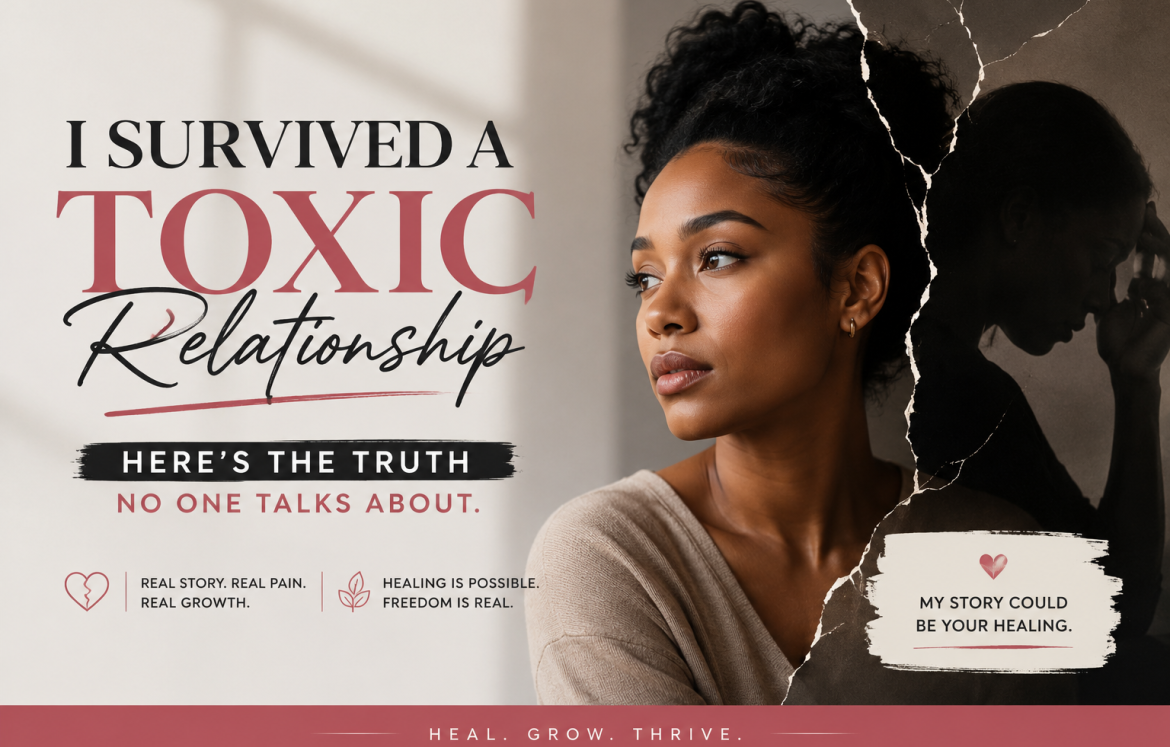
“If Someone Had Told Me Then, I Wouldn’t Have Believed Them.”
There was a time when I believed love was supposed to hurt.
Not physically. Not at first.
But emotionally.
I thought love meant sacrificing your happiness, constantly proving your loyalty, and forgiving the same mistakes over and over again. I convinced myself that every relationship had problems and that if I just loved harder, prayed more, and stayed patient, things would eventually get better.
I couldn’t have been more wrong.
Looking back now, I realize I wasn’t in love.
I was trapped.
And the most dangerous part wasn’t the shouting, the manipulation, or even the lies.
It was how normal all of it slowly became.
If you’ve ever questioned your own sanity because of someone else’s words
If you’ve apologized for things you didn’t do
If you’ve felt lonely while lying beside the person who claimed to love you
Then this story may feel painfully familiar to you.
Of Course It Started Like Every Fairy Tale
I met Daniel on a normal Tuesday afternoon.
I had stopped by an ice cream shop to get ice cream after work, hoping to enjoy a quiet hour and the novel I had been trying to finish for weeks.
He noticed the book in my hands.
“That’s one of my favorites.” He smiled.
I looked up.
He had kind eyes.
The kind that instantly made you feel comfortable.
We talked for nearly an hour.
About books, family, dreams, about everything and nothing.
When I left, I couldn’t stop smiling.
He sent me a text later that evening.
“I know this might sound crazy, but meeting you felt different.”
It made my heart flutter.
Within weeks we were inseparable.
He remembered every little detail about me.
My favorite flowers.
The way I liked my coffee.
The songs that made me cry.
The stories about my childhood.
For the first time in years, I felt completely seen.
My friends said I glowed differently.
Even my mother smiled whenever I mentioned his name.
“You seem happy,” she said one evening.
“I really am.”
And I meant it.
The Man Everyone Admired
Daniel was charming.
The kind of person who could make strangers laugh within minutes.
My family adored him.
My coworkers admired him.
My friends called him “the perfect boyfriend.”
He always opened doors.
Always offered to carry my bags.
Always checked if I got home safely.
From the outside, our relationship looked perfect.
Social media certainly thought so.
Photos of weekend trips.
Birthday surprises.
Sunset dinners.
Smiling selfies.
My friends would always make comments like
“Relationship goals!”
“You two are made for each other.”
“Don’t ever let him go.”
If only they knew.
The First Red Flag
It happened so subtly that I almost laughed it off.
One evening, I told Daniel I was having dinner with two friends from university.
His smile disappeared.
“Oh.”
I frowned.
“What’s wrong?”
“Nothing.”
“You don’t sound like it’s nothing.”
He shrugged and said
“I just thought you’d rather spend your Friday with me.”
I replied
“I see you almost every day.”
“I know.”
Silence…
Then he sighed.
“It’s okay. Go have fun.”
His words sounded supportive.
His tone didn’t.
Throughout dinner, my phone buzzed constantly.
“When are you leaving?”
“Who’s there?”
“Send me a picture.”
“Why haven’t you replied?”
By the time I got home, I had eighteen missed calls.
Eighteen.
I apologized.
Can you imagine that?
I apologized for spending three hours with my own friends.
He hugged me tightly.
“I was just worried.”
Those words became his favorite excuse.
Months passed.
Little by little, my world became smaller.
Whenever I wanted to visit my family, he would look disappointed
He would suddenly become emotional whenever I planned a girls’ night.
Whenever I tried to focus on work, he would accuse me of caring more about my career than our relationship.
Every disagreement ended the same way.
“You know I only act like this because I love you.”
“I’ve never loved anyone the way I love you.”
“I’m scared of losing you.”
Those sentences sounded romantic.
Until they became chains.
Without realizing it, I began cancelling plans.
Avoiding friends.
Ignoring family invitations.
Changing my routines just to keep the peace.
At first, everyone understood.
Eventually, they stopped asking.
Losing Myself Without Noticing
One Saturday morning, I stood in front of my wardrobe wearing a bright yellow dress.
It had always been one of my favorites.
Daniel looked at me and frowned.
“You’re wearing that?”
“Yes.”
“It’s a little… attention-seeking.”
I laughed awkwardly.
“You think so?”
“I’m just saying other men are going to stare.”
“I didn’t buy it for other men.”
“I know.”
Another pause.
“But if you respect me, maybe wear something less revealing.”
The dress wasn’t revealing.
It reached my knees.
Still…
I changed.
A week later he criticized my makeup.
Then my hairstyle.
Then my shoes.
Then my friends.
Then my laugh.
Little pieces of me disappeared one by one.
I didn’t notice because each compromise seemed so small.
One change here.
One apology there.
One sacrifice tomorrow.
Until one day I looked in the mirror and barely recognized the woman staring back.
She smiled less.
She laughed quietly.
She second-guessed every decision.
She asked permission for things she never used to ask permission for.
And somehow
She believed all of this was love.
The Lie I Told Everyone
People often asked me how we were doing.
I always answered the same way.
“We’re great.”
Because explaining the truth felt impossible.
How could I tell them that the man who brought me flowers every Friday also made me feel guilty for visiting my own parents?
How could I explain that the same man who called me beautiful every morning also criticized everything I wore?
How could I describe emotional pain that left no bruises?
So I smiled.
Posted another happy photo.
Accepted another bouquet.
Pretended everything was fine.
But deep inside..
Something was beginning to break.
When My Reality Started to Change
The first time Daniel called me “too sensitive,” I believed him.
We had been planning a weekend trip for weeks. I was excited and looking forward to two days away from work and the chance to reconnect.
The night before we were supposed to leave, he canceled.
“I made other plans.”
I stared at him, confused.
“What do you mean? We’ve already booked everything.”
He shrugged without looking up from his phone.
“Something came up.”
“You didn’t even ask if I was okay with changing the plans.”
He sighed dramatically.
“There you go again.”
“What?”
“Making everything into a big deal.”
I felt my cheeks grow warm.
“I’m not trying to argue. I just wish you had talked to me first.”
He laughed.
“You always overreact.”
By the end of the conversation, I wasn’t upset that he had canceled.
I was apologizing for being upset.
That became our pattern.
Every disagreement ended with me questioning whether my feelings were even valid.
A few months later, I noticed something strange.
Daniel would say things that contradicted conversations we’d already had.
One evening I reminded him about my cousin’s wedding.
“You said you’d come with me.”
“I never said that.”
“Yes, you did. We talked about it last week.”
“No, we didn’t.”
“I’m sure we did.”
He looked at me with complete confidence.
“You’re imagining things.”
I stood there, trying to replay the conversation in my head.
Had I misunderstood?
Was I remembering it wrong?
Eventually, I convinced myself that I must have.
But then, this incidence wasn’t the last time.
He denied promises he had made. He insisted arguments had happened differently.
He claimed he had never said hurtful things that I remembered word for word.
Slowly, I stopped trusting my own memory.
I started writing conversations in a notebook.
Dates.
Times.
Exact words.
Not because I wanted to prove him wrong.
Because I needed proof that I wasn’t losing my mind.
Walking on Eggshells
Our home no longer felt peaceful.
It felt unpredictable.
Some mornings he woke up cheerful.
He would make breakfast, kiss my forehead, and tell me how lucky he was to have me.
Other mornings, the smallest thing could ruin the entire day.
Leaving a cup in the sink.
Taking too long to answer a question.
Laughing during a television show he wasn’t interested in.
I never knew which version of Daniel I would meet.
So I became careful.
Very careful.
I replayed every sentence before speaking.
I checked my phone repeatedly to make sure I hadn’t missed one of his messages.
I apologized before he even expressed disappointment.
It was exhausting.
Yet somehow I believed I simply needed to be better.
Kinder.
Calmer.
More patient.
Maybe then everything would return to how it was in the beginning.
It never did.
The Distance Between Me and Everyone Else
One afternoon, my best friend, Sarah, called.
“I miss you.”
“I’ve just been busy.”
“You’ve been busy for almost a year.”
I laughed nervously.
“It’s work.”
She stayed quiet.
Then she asked gently,
“Or is it Daniel?”
My heart skipped.
“What do you mean?”
“I don’t know. We hardly see you anymore.”
“I told you, I’ve been busy.”
“Lena…”
Only Sarah still called me by the nickname she’d given me in university.
“I’ve known you for ten years.”
“You don’t sound happy anymore.”
I wanted to tell her everything.
Instead, I said,
“I’m fine.”
She didn’t argue.
But before hanging up, she whispered,
“If you ever need me… I’m here.”
After the call, Daniel asked who I’d been speaking to.
“Sarah.”
“What did she want?”
“Just to catch up.”
He rolled his eyes.
“She never liked me.”
“That’s not true.”
“I think she’s jealous.”
“Jealous of what?”
“Our relationship.”
I didn’t answer.
Later that evening he casually remarked,
“I don’t think she’s a good influence on you.”
Within weeks, I stopped returning Sarah’s calls.
Looking back now, I realize something heartbreaking.
The people who truly loved me were trying to reach me.
I just couldn’t hear them over the voice, Daniel’s voice, who was telling me everyone else was the problem.
Love Became Conditional
Daniel’s affection slowly became something I had to earn.
If dinner wasn’t ready on time, he became cold.
If I disagreed with him, he withdrew emotionally.
If I spent time with family, he ignored my messages for hours.
Then, when I became anxious enough, he would suddenly become affectionate again.
Flowers.
Compliments.
Long hugs.
“I’m sorry.”
“I’ve been stressed.”
“You know you’re everything to me.”
Those moments felt like relief.
Like finally being allowed to breathe.
I didn’t realize they were also keeping me trapped.
The kindness always returned just before I was ready to leave.
Enough to make me believe the man I fell in love with was still there.
Enough to convince me to stay a little longer.
The Birthday That Changed Everything
My twenty-eighth birthday was on a bright Saturday morning.
I had imagined celebrating quietly with family and a few close friends.
Instead, Daniel insisted on planning everything.
“Trust me,” he said.
“I’ve got this.”
For most of the day, things seemed perfect.
Until dinner.
One of my colleagues gave me a thoughtful gift, a journal with my initials embossed on the cover.
“It reminded me of you,” she said.
I thanked her warmly.
As we drove home, Daniel was silent.
Finally, he spoke.
“You seemed very happy with that gift.”
“I was. It was thoughtful.”
“You smiled at him a lot.”
I blinked.
“What?”
“Don’t play innocent.”
“Daniel… he’s married.”
“So?”
“So there’s nothing between us.”
He gripped the steering wheel tighter.
“You embarrassed me tonight.”
“I honestly don’t understand what I did.”
His voice rose.
“Exactly! You never understand!”
When we reached home, he slammed the door so hard the walls shook.
For the first time…
I felt afraid.
Not because he hit me.
He never did.
I was afraid because I suddenly realized I no longer knew what he was capable of.
That night, I cried quietly in the bathroom so he wouldn’t hear me.
As I looked into the mirror, I barely recognized the woman staring back.
She looked exhausted.
She looked frightened.
And for the very first time, a question crossed her mind that she had spent years avoiding.
What if this isn’t love at all?
The Question I Could No Longer Ignore
For days after my birthday, I couldn’t shake the thought that had surfaced in the bathroom mirror.
What if this isn’t love?
The question followed me everywhere.
To work.
To the grocery store.
Into my dreams.
I had spent years defending Daniel to my family, my friends, and even to myself.
But now, every memory seemed different.
The flowers no longer erased the insults.
The apologies no longer outweighed the accusations.
The good days no longer felt like proof that everything was okay.
Instead, they felt like brief pauses between storms.
A week later, I arrived at work looking exhausted.
I had barely slept after another night of arguments that started over something as small as replying to a text message ten minutes late.
During lunch, my colleague Maya sat beside me.
“You’ve been quiet lately.”
I smiled politely.
“I’m just tired.”
She looked at me for a moment.
“You don’t have to tell me anything.”
I nodded.
“But if someone is making you feel small, just know you deserve better.”
My heart pounded.
I hadn’t told Maya anything about my relationship.
Not one detail.
Yet somehow,
She saw what I had worked so hard to hide.
Tears filled my eyes before I could stop them.
“I’m embarrassed,” I whispered.
“Why?”
“Because everyone thinks I have the perfect relationship.”
She reached across the table and squeezed my hand.
“Abuse doesn’t always leave bruises.”
Those six words stayed with me.
That evening, after Daniel fell asleep, I sat in the living room with my laptop.
For the first time, I searched something I had been too afraid to type before.
“Signs of a toxic relationship.”
Article after article appeared.
Emotional manipulation.
Gaslighting.
Isolation.
Control disguised as love.
Walking on eggshells.
Constant self-doubt.
Reading those words felt like someone had secretly been documenting my life.
Then I came across another phrase.
Trauma bond.
I read for nearly three hours.
For the first time in years, I wasn’t asking,
“What’s wrong with me?”
I was asking,
“What has been happening to me?”
That realization didn’t solve everything.
But it changed everything.
The next morning, I stared at Sarah’s name in my contacts.
It had been months since we’d spoken.
My thumb hovered over the call button.
Then I pressed it.
She answered on the second ring.
“Lena?”
Her voice sounded surprised.
“I… I need to talk.”
There was a brief silence.
Then she said something I’ll never forget.
“I’ve been waiting for this call.”
No judgment.
No anger.
No “I told you so.”
Just love.
We met that afternoon in the same spot where Daniel and I had first met.
The irony wasn’t lost on me.
As soon as I saw Sarah, I burst into tears.
“I don’t know what’s happened to me,” I said.
She listened quietly as years of hidden pain poured out.
When I finished, she looked at me with tears in her own eyes.
“Lena,” she said softly, “I’ve missed you.”
Not,
“Why didn’t you leave sooner?”
Not,
“I warned you.”
Just,
“I’ve missed you.”
In that moment, I realized how lonely I had become.
Sarah took out a notebook.
She drew a circle.
“This is what I’ve been reading about,” she said.
She labeled four sections.
Tension, explosion, apology, honeymoon.
“Does any of this feel familiar?”
I stared at the page.
It described my relationship perfectly.
Things would be peaceful.
Then tension would build.
A small disagreement would explode into an argument.
Daniel would apologize.
He’d become affectionate again.
I’d believe things were changing.
Then the cycle would start over.
Again.
And again.
And again.
It wasn’t random.
It was a pattern.
Seeing it drawn on paper made something click inside me.
I wasn’t failing at love.
I was trapped in a cycle.
Leaving wasn’t as simple as walking out the door.
I still loved the version of Daniel I had met years earlier.
Or perhaps I loved the hope that he would become that person again.
But I also knew I couldn’t keep living this way.
Sarah helped me make a plan.
Not a dramatic escape.
Just practical steps.
I quietly opened a separate savings account.
I gathered important documents and stored copies with Sarah.
I began telling two trusted family members what had been happening.
I updated my résumé and started looking for apartments closer to work.
Every small step made me feel guilty.
As though I were betraying him.
Then I reminded myself:
Protecting myself was not betrayal.
It was survival.
One evening, Daniel noticed I seemed distant.
“Are you okay?”
For a moment, I almost told him everything.
Instead, I simply nodded.
He hugged me.
“I know I’ve made mistakes.”
I stayed silent.
“I promise things will change.”
I had heard those words dozens of times before.
But this time…
Something inside me stayed still.
I realized I no longer believed them.
Not because I hated him.
But because promises without change are only words.
And words had kept me trapped for far too long.
A few days later, I stood outside my office during my lunch break.
The sun was warm against my face.
People hurried past, carrying coffee cups and talking on their phones.
Life continued around me.
For years, I had waited for someone else to save me.
For Daniel to change.
For the perfect moment to leave.
For love to become what I believed it could be.
Then a quiet thought settled in my heart.
No one was coming to rescue me.
If my life were going to change…
I had to be the one to change it.
It was the most frightening realization I’d ever had.
And strangely…
It was also the most freeing.
The Hardest Goodbye
The day I left wasn’t dramatic.
No arguments.
No shouting.
Just silence.
Daniel had gone to work early that morning. I stood in the middle of our apartment surrounded by cardboard boxes that contained the pieces of a life I had once dreamed would last forever.
I looked around one last time.
The sofa where we’d watched movies.
The dining table where we’d shared dinners.
The framed photos on the wall.
To anyone else, it looked like a happy home.
Only I knew how much sadness those walls had witnessed.
My hands trembled as I picked up my suitcase.
Before closing the door, I whispered,
“I choose me.”
It wasn’t an act of anger.
It was an act of survival.
My phone rang before I reached Sarah’s apartment.
Daniel.
I didn’t answer.
He called again.
And again.
Then the messages began.
“Where are you?”
“Please talk to me.”
“You’re overreacting.”
A few minutes later, the tone changed.
“After everything I’ve done for you?”
“You’re selfish.”
“You’ll never find someone who loves you like I do.”
Then came another message.
“I’m sorry. I’ll change. I promise.”
I cried as I read those words.
Not because I wanted to go back.
Because a part of me still wished they were true.
Sarah gently took my phone.
“You don’t have to answer today.”
She was right.
For the first time in years, I didn’t explain myself.
I didn’t defend my decision.
I didn’t apologize.
I simply protected my peace.
Healing Wasn’t Instant
People often think leaving is the end of the story.
For me, it was the beginning.
The first few weeks were incredibly difficult.
I questioned myself constantly.
Did I make the right decision?
Was I too impatient?
Could things really have changed if I’d stayed longer?
Those thoughts appeared most often on lonely evenings.
Healing wasn’t easy.
Some mornings I woke up feeling hopeful.
Other days I cried because a song reminded me of happier times.
I missed the version of Daniel who made me laugh.
I missed the dreams we’d built together.
But I did not miss living in fear of saying the wrong thing.
I did not miss doubting my own reality.
I did not miss shrinking myself to make someone else comfortable.
Little by little, I began to understand something important.
Missing someone does not always mean they were good for you.
Sometimes you miss the hope of what the relationship could have been.
Finding Myself Again
Therapy became one of the greatest gifts I ever gave myself.
For the first time, someone listened without judgment.
I learned that healthy love doesn’t require constant anxiety.
I learned that boundaries are not acts of selfishness.
They’re acts of self-respect.
I started writing in the journal my colleague had given me months earlier.
Every day, I wrote one thing I had forgotten about myself.
“I love painting.”
“I enjoy long walks.”
“I laugh loudly when I’m truly happy.”
“I don’t actually hate wearing yellow.”
One afternoon, I found that yellow dress tucked away at the back of my wardrobe.
The same dress I had stopped wearing because someone else didn’t approve.
I put it on.
Looked in the mirror.
And smiled.
Not because I looked different.
Because I finally looked like myself again.
A few months after leaving, I visited my parents.
As we washed dishes together, my mother spoke quietly.
“I wanted to say something for a long time.”
I looked at her.
“I could see you disappearing.”
Tears filled my eyes.
“Why didn’t you tell me?”
She smiled sadly.
“I tried.”
“You always defended him.”
She paused before adding,
“I knew you would leave only when you were ready.”
Her words reminded me of something I now tell others.
You cannot force someone to leave a toxic relationship.
But you can make sure they know they have somewhere safe to land when they do.
It’s already two years since I left, and my life feels very different.
My apartment is smaller.
My bank account isn’t overflowing.
Some days are still hard.
But my heart is peaceful.
I spend weekends with friends I almost lost.
I visit my parents without asking anyone’s permission.
I wear what I like.
I laugh without wondering if someone will criticize me.
I no longer apologize for taking up space.
Most importantly…
I trust myself again.
That may not sound extraordinary.
But after years of believing my own thoughts couldn’t be trusted…
It feels like freedom.
What I Learned From Surviving a Toxic Relationship
Looking back, these are the lessons I wish someone had taught me sooner:
1. Love should never make you afraid to be yourself.
A healthy relationship encourages you to grow, not shrink.
2. Control is not the same as care.
Someone who truly loves you doesn’t isolate you from friends, family, or your own identity.
3. Consistent actions matter more than beautiful apologies.
Real change is demonstrated over time, not promised during emotional moments.
4. Your feelings are valid.
If someone constantly tells you you’re “too sensitive” or “imagining things,” pay attention to that pattern.
5. Leaving takes courage, not weakness.
Walking away from a toxic relationship is one of the bravest decisions many people ever make.
Here are some frequently asked questions that may help.
How do I know if I’m in a toxic relationship?
Common signs include constant criticism, manipulation, controlling behavior, isolation from loved ones, gaslighting, fear of expressing yourself, and feeling emotionally exhausted more often than supported.
Why is it so difficult to leave?
Many people experience hope that things will improve, emotional attachment, fear of being alone, financial concerns, or concern for children or family. These factors can make leaving feel overwhelming.
Can a toxic relationship become healthy?
Change is possible only if both people genuinely acknowledge the problem, take responsibility, and commit to sustained change. Promises alone are not enough.
How can I begin healing?
Seek support from trusted friends or family, consider speaking with a qualified therapist, rebuild routines that bring you joy, and give yourself permission to heal at your own pace.
Will I ever trust again?
Yes. Healing doesn’t mean forgetting what happened. It means learning to recognize healthy relationships, trust your instincts, and believe that you deserve respect and kindness.
If this story felt familiar, please remember this:
You deserve a relationship where you feel safe, respected, heard, and valued.
Love should never require you to lose yourself.
If you’re in a difficult situation today, know that asking for help is not a sign of failure. Sometimes the strongest thing you can do is tell someone you trust what’s happening.
Healing takes time, but it is possible.
And one day, like me, you may look in the mirror and realize that the person staring back is no longer surviving; she’s living.
Many people leave toxic relationships with emotional scars nobody sees. The heartbreak may be over, but the memories, self-doubt, fear, and confusion can still remain.
Many said, “Pray about it.” They said you’re strong; you’ll be fine. They said at least he/she didn’t hit you. But you know what you went through. The silent treatment that lasted days, the way your confidence was chipped away so slowly you didn’t notice until you looked in the mirror one day and didn’t recognize yourself. You tried to explain it to people, and they didn’t get it. So you stopped explaining.
This guide gets it.
It was written for people who survived what others couldn’t see, the kind of damage that doesn’t leave marks on the outside. It speaks to your experience without judgment
Leaving wasn’t the hardest part. The hardest part is what came after. Missing someone who hurt you and feeling ashamed about it. Crying over a person your friends told you to forget. Replaying conversations at 2am wondering what you did wrong. The hardest part is feeling like you should be over it, and you’re not. Here’s what no one tells you: that’s not weakness. That’s what surviving a toxic relationship actually looks like. And there’s a name for what you’re feeling. There’s a reason it’s this hard. And there is absolutely a way through.
This guide was written for the version of you that made it out but still feels trapped inside.
It covers:
→ Why you stayed, and why that makes complete sense
→ The manipulation tactics you lived through
→ Why you miss them even though they hurt you
→ How to stop second-guessing every single feeling you have
→ What rebuilding your identity actually looks like: step by step
Start Your Healing Journey Today
Download your copy of:
“I Survived a Toxic Relationship – The Truth No One Talks About”
A guide created to remind you:
You are more than what you went through.
You can heal.
You can rebuild.
You can love again.
And if you enjoyed the story, subscribe to our newsletter for more inspiring stories, practical self-improvement articles, and resources to help you build a healthier, happier life. Share this article with someone who may need the reminder that they are worthy of love, respect, and peace.