
Simple Ways to Save Money Every Month: Practical Tips That Actually Work
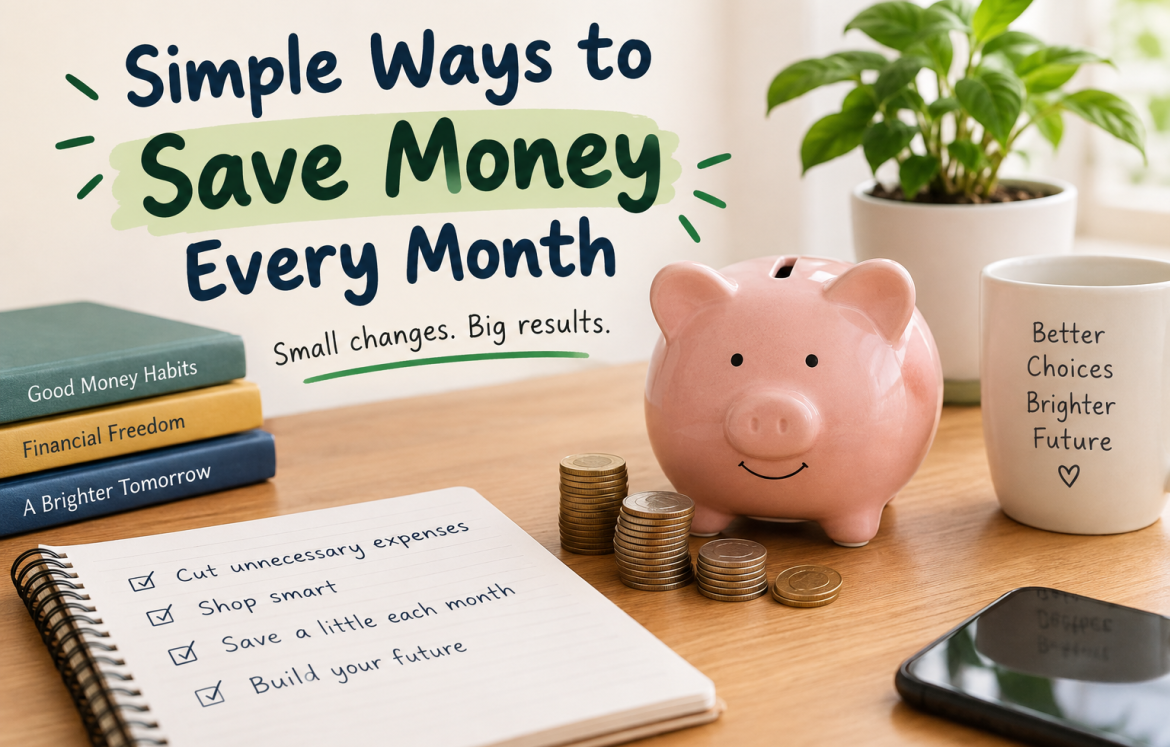
One of the things I know is important in life is saving money, but I also understand how challenging it can be in real life. I occasionally make a self-promise to save a substantial sum of money before the end of the month after receiving money. I might even mentally arrange how much I want to set aside. However, I might find that not much is left after paying bills, purchasing food, managing transportation expenses, and attending to other obligations.
If you have ever experienced this, I want you to know that you are not alone.
The cost of living might make saving money seem unachievable. Transportation costs go up, food prices go up, and unforeseen costs show up when we least expect them. Even when I make an effort to spend wisely, I occasionally discover that my funds vanish more quickly than I anticipated.
But over time, I’ve realized something crucial: saving money doesn’t always start with a high salary. Learning how to manage the money I already have is also the first step.
I do not need to become rich overnight before I can start saving. I do not need to stop enjoying life or deny myself everything I love. What I need is a clear plan, better spending habits, and the willingness to make small changes that can improve my financial situation over time.
In this guide, I will share simple and practical ways you can apply to save money every month, even when your income is limited. These ideas can help me become more intentional about spending, reduce unnecessary expenses, prepare for emergencies, and work toward my financial goals.
Whether you earn a salary, run a small business, work from home, or depend on an irregular income, I believe there are useful lessons here that you can apply to your own situation.
The goal is not to save every naira or every dollar at the expense of your well-being. The goal is to make your money work better for you, one month at a time.
1. Start by Understanding Where Your Money Goes
One of the first things I do when I want to improve my savings is pay attention to how I spend my money.
Sometimes, I may believe that my biggest expenses are rent, food, and transportation. While these costs can take up a large part of my income, smaller expenses can also make a difference.
Buying snacks every day, paying for subscriptions I rarely use, ordering food when I already have something to eat at home, or making frequent unplanned purchases can gradually reduce the money I have available.
The problem is that these expenses may seem too small to matter. However, when I add them together over several days or weeks, I may discover that they account for a significant amount of my spending.
How to track your expenses
You do not need expensive financial software to understand your spending habits. You can start with a notebook, a simple spreadsheet, or the notes application on your phone.
For me, every month, I record the money I receive and the money I spend. I divide my expenses into simple categories, such as:
- Food and groceries
- Rent and household bills
- Transportation
- Health and personal care
- Family responsibilities
- Entertainment
- Shopping
- Savings
- Unexpected expenses
At the end of the month, I review the list and ask myself a few honest questions.
Where did most of my money go? Which expenses were necessary? Which purchases could I have avoided? Did I spend more than I expected in any category?
This exercise helps me see my financial habits more clearly.
I do not judge myself for every mistake I discover. Instead, I use the information to make better decisions in the following month.
You cannot manage your money effectively if you do not understand how you spend it. Tracking your expenses gives you a starting point for making real changes.
2. Create a Monthly Budget That Matches Your Income
A budget is one of the most useful tools you can use to manage money. It helps you decide what your money should do before you begin spending it.
Without a budget, you may spend based on what feels important at the moment. You might buy something you want today and later discover that you do not have enough money for an important bill.
A budget helps you plan ahead.
When I create my monthly budget, I begin with the amount of money I realistically expect to receive. Then list my essential expenses, savings goals, debt payments, and other spending needs.
For example, if I receive $10,000 in a month, I can create a simple plan based on my actual responsibilities.
| Expense category | Example monthly amount |
|---|---|
| Food and groceries | $1000 |
| Transportation | $500 |
| Household bills | $1000 |
| Family and personal needs | $500 |
| Emergency savings | $3000 |
| Other planned expenses | $2000 |
| Flexible spending | $2000 |
| Total | $10,000 |
These figures are only an example. They are not a recommended budget for everyone. Your own amounts will depend on where you live, your household size, your income, and the cost of your basic needs.
If your essential expenses already take up most of your income, you will not force yourself to copy someone else’s budget. You will have to create a realistic plan based on what you can afford.
Also leave room for expenses that do not happen every month, such as clothing, school costs, annual fees, or repairs. When possible, set aside a small amount regularly for these expenses so they do not completely disrupt your budget when they arrive.
The most important thing is to make a plan you can actually follow.
3. I Pay Myself First, Even If the Amount Is Small
One habit I want to develop is saving before I spend money on non-essential things.
In the past, I might have waited until the end of the month to see what was left. The problem with this approach is that there may be nothing left to save.
I now understand that saving should be part of my financial plan rather than something I do only when I have extra money.
Whenever I receive income, I try to set aside an affordable amount before spending on things that can wait.
If I receive $100,000, I might aim to save ₦5,000 or ₦10,000, depending on my responsibilities. If my income is lower than expected, I can save less. If I have an unusually expensive month, I may need to adjust my target.
The point is to build a habit that I can maintain.
Here is an example of how small monthly savings can grow if I consistently set money aside and do not withdraw it:
| Monthly savings | Amount saved in 6 months | Amount saved in 12 months |
|---|---|---|
| $2,000 | $12,000 | $24,000 |
| $5,000 | $30,000 | $60,000 |
| $10,000 | $60,000 | $120,000 |
| $20,000 | $120,000 | $240,000 |
These figures assume that I make every contribution and do not withdraw any money. They do not include interest, fees, or inflation.
Looking at these numbers reminds me that I do not have to start with a large amount. What matters is finding an amount that fits my circumstances and making saving a regular habit.
If I cannot save much today, I can start small and increase the amount when my income improves.
4. Plan Meals Before Shopping for Food
Food is one of the expenses that can take a large portion of your monthly income. Since we need to eat every day, you cannot simply remove food from your budget. However, you can become more careful about how you buy and prepare it.
One simple habit is planning your meals before you go shopping.
When you shop without a plan, you may buy things you do not need, forget ingredients you already have, or purchase food that eventually goes bad. These mistakes waste money.
Before shopping, check what is already in your kitchen. Write down the ingredients you need for the meals you plan to prepare.
Also try to choose meals that use similar ingredients. If you buy beans, rice, vegetables, eggs, or other basic foods, you can plan several meals around what you have purchased instead of buying completely different ingredients for every meal.
Other ways you can reduce food expenses
- Prepare more meals at home when it is practical.
- Compare prices at different shops or markets.
- Buy quantities that your household can use before the food spoils.
- Store food properly to reduce waste.
- Carry homemade food or snacks when you are going to be away from home for a long time.
- Use leftovers safely instead of throwing away food that can still be eaten.
- Avoid shopping for groceries when you are hungry and more likely to make impulse purchases.
I do not believe that saving money means eating poorly. Health matters, too. Focus on affordable, nutritious foods that suit your needs and are available where you live.
Even small changes in the way you shop, cook, and store food can help you manage your grocery budget more effectively.
5. Reduce Impulse Buying
Impulse buying happens when I purchase something without planning to buy it. It might be a new outfit, an attractive kitchen item, a gadget, or something I see online.
Sometimes, the purchase feels exciting in the moment. Later, I may realize that I did not really need it.
I have learned that one of the simplest ways to save money is to give myself time before making non-essential purchases.
When I see something I want, I ask myself three questions:
- Do I actually need this item?
- Can I afford it without affecting my bills or savings?
- Would I still want it if I waited a few days?
If the item is not urgent, I give myself time to think about it. For a small purchase, I might wait until the next day. For a more expensive purchase, I may wait a week or longer.
This simple pause helps me separate what I genuinely need from what I want because of excitement, pressure, or advertising.
I also avoid treating every discount as an opportunity to save. If I spend $500 on something I did not need simply because it was on sale, I have still spent ₦500.
A discount only saves you money when you are already planning to buy the item and the purchase fits your budget.
Remind yourself that you do not need to own everything you admire. You can appreciate something without buying it.
6. Set a Limit for Non-Essential Spending
I do not think I need to stop enjoying life just because I want to save money.
If I make a budget that leaves no room for enjoyment, I may find it difficult to follow. I might become frustrated and eventually abandon the plan.
Instead, I give myself a reasonable amount for things I enjoy.
This could include eating out, buying a book, watching a film, meeting friends, or purchasing an occasional personal treat.
The amount depends on what I earn and what I need to pay for. If money is tight, my entertainment budget may be very small. If my income improves, I may have more room for these activities.
The important thing is that I decide the amount in advance.
For example, if I decide that I can afford $1,000 for personal treats this month, I try to stay within that limit rather than spending small amounts repeatedly without keeping track.
You can still enjoy your life while being responsible with your money.
Also look for free or low-cost activities. You can spend time with friends at home, enjoy a walk, read a book, learn a new skill online, or explore hobbies that do not require frequent spending.
Saving money does not mean you must remove every enjoyable experience from your life. It means you learn to enjoy things without allowing them to interfere with your financial priorities.
7. Review Subscriptions and Recurring Payments
Some expenses are easy to forget because they happen automatically.
I may sign up for a streaming service, music platform, mobile application, cloud storage plan, or another subscription. At first, the service seems useful. After some time, I may stop using it but continue paying for it.
These payments can gradually reduce my available income.
To avoid this, I review my recurring payments at least once every month or two.
I check my bank statements, payment notifications, and subscription settings. I make a list of the services I pay for and ask myself whether each one is still useful.
If I have two services that perform the same function, I consider whether I need both. If I no longer use a subscription, I cancel it before the next payment whenever possible.
I also check whether I am paying for services that I can access through a free plan or a more affordable option.
However, I do not cancel a service that I genuinely need simply because it costs money. For example, a tool that helps me work or earn an income may be worth keeping.
The aim is to remove waste, not to make life unnecessarily difficult.
If you can save $2,000 every month by cancelling an unused subscription, that is $24,000 over a year. The amount may seem small, but it could help you pay a bill, purchase something important, or build your emergency fund.
8. Compare Prices Before Making Purchases
I have learned that the first price I see is not always the best price.
Whether I am buying groceries, clothing, household items, or electronics, I try to compare prices before spending a significant amount.
This does not mean I must visit every shop in town. Sometimes, checking two or three sellers is enough to understand the available options.
When comparing prices, I also consider quality, durability, transport costs, and the reliability of the seller.
For example, a cheaper product may not be the better choice if it breaks quickly and needs to be replaced. Paying slightly more for something that lasts longer may save money in the long run.
I also try to distinguish between genuine needs and purchases that are simply attractive.
Before buying an expensive item, I ask myself whether there is a more affordable alternative that will do the job just as well.
For everyday products, I may compare unit prices rather than looking only at the total price. A larger package is not automatically cheaper per unit, and I should only buy a larger quantity if I can use it before it expires or becomes unusable.
Online shopping requires similar care. Consider delivery fees, return policies, seller reviews, and the possibility of misleading discounts.
The goal is not always to buy the cheapest product. It is to get good value for the money you spend.
9. I Reduce Transportation Costs Where Possible
Transportation is another expense that can affect my monthly budget, especially when I travel frequently for work, school, business, or family responsibilities.
I cannot always choose how I travel, but I can look for ways to make my journeys more efficient.
For example, I can plan several errands for the same day instead of making separate trips throughout the week. If I need to visit the market, collect a package, and buy household supplies, I can see whether I can complete these tasks in one journey.
When it is safe and practical, I may walk short distances instead of paying for transport. I can also compare available transport options and choose one that offers a reasonable balance between cost, safety, and convenience.
If I use a personal vehicle, I pay attention to maintenance, tyre pressure, fuel use, and unnecessary trips. Proper maintenance can help prevent some expensive problems later.
For people who regularly travel to the same workplace, sharing transport with trusted colleagues may be another option, provided it is safe and convenient.
I do not put myself at risk just to save a small amount of money. Safety and reliable transportation are important.
Instead, I focus on avoiding unnecessary journeys, planning ahead, and choosing affordable options that fit my circumstances.
Over a month, these small decisions can help you reduce transport expenses without disrupting your daily responsibilities.
10. Save Money on Electricity, Water, and Household Bills
Household bills may seem unavoidable, but there are often simple ways to manage them more carefully.
I begin by looking at the bills I pay regularly. These might include electricity, water, cooking fuel, internet, phone services, and other household expenses.
I then identify where I can reduce waste without making my home uncomfortable or unsafe.
For example, I can switch off lights when I leave a room, unplug devices when appropriate, and avoid leaving appliances running unnecessarily.
Where practical, I can use energy-efficient bulbs and choose appliances that consume less electricity. I also avoid running appliances when they are not needed.
For water, I try to repair leaking taps, close taps when water is not being used, and avoid wasting clean water.
I review my phone and internet plans, too. If I regularly pay for more data or airtime than I use, I can look for a more suitable plan.
I also pay attention to food storage and cooking habits. Planning meals and preparing several dishes efficiently may help reduce wasted fuel and time.
Not every household has the same options. Some people may have limited control over electricity supply, rent, water access, or the type of cooking fuel available. I focus on the changes I can realistically make.
I also avoid buying expensive equipment solely to save a small amount on bills unless I have carefully considered the cost and likely long-term benefit.
The idea is simple: look for repeated waste and reduce it wherever you can.
11. Make a Shopping List and Stick to It
Shopping without a list can make it easy to forget important items and buy unnecessary things.
When I go to the market or supermarket, I try to write down what I need before leaving home.
My list may include food, toiletries, cleaning products, and other household essentials. I check what I already have before adding anything to the list.
Once I start shopping, I use the list as my guide.
If I see something attractive that is not on the list, I ask myself whether I genuinely need it. If it can wait, I leave it for another time.
I also set a spending limit before shopping. This helps me make decisions based on what I can afford rather than how much I feel like buying.
Another useful habit is separating essential purchases from optional ones. If I have a limited amount of money, I buy the most important items first.
I do not always have to purchase everything at once. If an item is not urgent, I can plan for it in a future budget.
I also avoid buying large quantities simply because something is on promotion. Buying more than I need can lead to waste, especially when the product has an expiry date or requires storage space.
A shopping list may seem like a small thing, but it helps you spend with a purpose.
12. Prepare for Emergencies Instead of Relying on Borrowing
One of the reasons saving money matters to me is that life does not always go according to plan.
A medical bill, urgent repair, family emergency, or sudden reduction in income can create financial pressure.
If I have no savings, I may need to borrow money, sell something important, or delay another essential payment.
An emergency fund helps me prepare for unexpected expenses.
I do not expect to build a large emergency fund overnight. I start with a small target that feels achievable.
For example, I may first aim to save enough to cover one common unexpected expense. After reaching that target, I gradually work toward having enough to cover several weeks or months of essential living costs.
The right target depends on my responsibilities, job security, household needs, and available income.
I keep emergency savings separate from the money I use for everyday spending. If possible, I use an account or savings arrangement that is secure, accessible when needed, and not too easy to spend from impulsively.
I also understand the difference between an emergency and a planned expense.
Buying clothes for a celebration, paying a predictable school fee, or renewing an annual subscription should ideally be planned for in advance. These expenses may be important, but they are not necessarily emergencies.
When I save for predictable expenses separately, I can protect my emergency fund for situations that genuinely require it.
Even if you can only save a small amount each month, remind yourself that every contribution helps you become more prepared.
13. Avoid Unnecessary Debt and Pay Attention to Interest
Debt can make it harder to save because part of my income will now have to go toward repayments rather than future goals.
Not all borrowing is the same, and there may be situations where borrowing is necessary. However, I try to understand the cost before taking on a new debt.
Before borrowing money, I ask myself how much I will repay in total, how long repayment will take, and whether the monthly payment fits my budget.
I also pay attention to interest rates, late-payment fees, service charges, and other conditions.
If I already have several debts, I make a list of the balances, minimum payments, interest rates, and due dates.
I make the required minimum payments where possible and then choose a repayment strategy that suits my situation. One approach is to focus extra payments on the debt with the highest interest rate, which can reduce the total interest paid. Another is to clear the smallest balance first for a sense of progress, while keeping up with the other required payments.
I avoid taking a new loan simply to maintain a lifestyle I cannot afford.
I am also careful with quick-loan offers that promise easy access to cash but come with high costs or unclear terms.
If my debts are already overwhelming, I may need to review my budget, speak with my lenders about available repayment options, or seek reliable financial guidance.
Reducing expensive debt can be an important part of improving your ability to save. You do not have to solve every financial problem at once, but you can begin by understanding what you owe and making a clear plan.
14. Use Cash Limits or Separate Spending Accounts
Sometimes, I find it difficult to control spending when all my money is in one account and I can access it easily.
One method I can use is to divide my money into separate categories.
For example, I can keep money intended for bills separate from my everyday spending money and my savings.
I may also decide to use a fixed cash amount for certain expenses, such as weekly groceries or personal spending. When that amount is finished, I pause before spending more and check whether the extra expense is genuinely necessary.
Another option is to create separate savings spaces or subaccounts if my financial institution provides them.
I can label these savings goals according to their purpose, such as:
- Emergency fund
- Rent and household expenses
- Education
- Business or career goals
- Future purchases
- Long-term savings
Separating money in this way makes it easier to see what I can spend and what I need to protect.
However, I pay attention to bank charges, withdrawal fees, and account conditions. I do not want the cost of managing several accounts to cancel out the benefits.
The best system is the one I can understand and use consistently.
If you prefer using a notebook and one bank account, that can work too. What matters is knowing how much money is available for each purpose.
15. Find Affordable Alternatives to Expensive Habits
Some of the habits that cost me money are things I can enjoy in less expensive ways.
For example, if I frequently buy lunch outside, I may prepare lunch at home on some days. If I enjoy entertainment, I can alternate paid activities with free ones. If I regularly buy new clothes, I can make better use of the clothes I already own.
I do not have to eliminate every habit I enjoy. I can look for a more affordable way to enjoy it.
Here are some examples:
- Instead of buying coffee or drinks outside every day, I can prepare them at home when practical.
- Instead of paying for every new book, I can explore libraries, used books, or legitimate free reading resources.
- Instead of buying a new outfit for every occasion, I can create different looks with clothes I already own.
- Instead of eating out several times a week, I can reserve restaurant visits for occasions that matter to me.
- Instead of purchasing every new gadget, I can keep using a reliable device until I have a real reason to replace it.
- Instead of paying for several entertainment services at once, I can choose the ones I use most.
Try to avoid comparing your spending habits with those of people whose financial circumstances you do not know.
Someone else’s lifestyle may be supported by a different income, savings, family situation, or financial priorities. You do not need to spend money to prove that you are doing well.
It is important that your financial decisions reflect your own goals and circumstances.
16. Turn Saving Into a Monthly Challenge
Sometimes, saving feels easier when I give myself a clear goal.
Instead of simply saying, “I want to save more money,” I choose a specific target and a realistic period.
For example, I may decide to save ₦5,000 every month for six months. Or I may choose to save a small amount every week until I reach a particular goal.
I can also try a no-spend challenge for a short period. During that time, I avoid unnecessary purchases while continuing to pay for food, bills, transport, health needs, and other essentials.
The purpose is not to punish myself. It is to become more aware of the difference between needs and wants.
Another idea is to save any unexpected extra money I receive, such as a small bonus, gift, or additional income, after accounting for urgent needs and obligations.
I can also use a savings tracker. Every time I save money, I record the amount or mark a progress chart.
Seeing my progress can encourage me to continue.
However, I do not treat the challenge as a competition. If I miss a contribution because of an unexpected expense, I adjust my plan and continue when I can.
A savings habit should support your life, not become another source of stress.
17. Look for Ways to Increase My Income
There is an important point I do not want to ignore: sometimes, the problem is not that I spend carelessly. Sometimes, my income is simply not enough to cover my essential expenses.
If most of my money goes toward food, rent, transportation, healthcare, and family responsibilities, there may be very little left to cut.
In that situation, I need to look at both spending and income.
Depending on my skills, available time, and circumstances, I may explore ways to earn extra money.
These could include:
- Offering a service based on a skill I already have.
- Tutoring students in a subject I understand well.
- Selling products I can source or produce responsibly.
- Taking on occasional freelance work.
- Learning a practical skill that could improve my earning opportunities.
- Looking for additional hours or better-paid work where available.
- Turning a hobby into a small business if there is genuine demand.
I do not assume that every side hustle will make money quickly. Some require training, equipment, marketing, or an initial investment. I consider these costs carefully before starting.
I am also cautious about opportunities that promise guaranteed returns, instant wealth, or unusually high earnings with little effort.
If I earn additional income, I decide in advance how to use it. I may direct part toward urgent needs, part toward debt repayment, and part toward savings.
Increasing your income will not automatically solve every financial problem, but it can give you more room to make progress when your current earnings are too limited.
18. Set Clear Savings Goals
I find it easier to save when I know why I am saving.
A general desire to have more money is useful, but a specific goal gives me something concrete to work toward.
For example, I may want to build an emergency fund, pay for a course, replace a broken appliance, save for school fees, prepare for a move, or start a small business.
Once I identify my goal, I estimate how much I need and when I hope to reach it.
Suppose I want to save $60,000 over twelve months. If I can save consistently, I need to set aside an average of $5,000 each month.
If that amount is too high for my current income, I can extend the timeline, reduce the target, or look for ways to increase my savings capacity.
I do not choose a target simply because someone else has reached it. I choose one that makes sense for my life.
I also separate short-term goals from long-term goals. Money I may need soon should generally be kept somewhere suitable for that time frame, rather than placed in a risky investment.
For longer-term goals, I can learn about appropriate savings and investment options after considering risk, fees, access to my money, and inflation.
Having clear goals helps you understand why you are making certain spending choices. When you are tempted to make an unnecessary purchase, you can remind yourself of the more important thing you are working toward.
19. Review Progress at the End of Every Month
Creating a budget is a good start, but I also need to check whether my plan is working.
At the end of each month, I spend a little time reviewing my income, spending, and savings.
I compare what I planned to spend with what I actually spent. I check whether I reached my savings target and identify any expenses that were higher than expected.
I also ask myself what went well.
Perhaps I reduced food waste, cancelled an unused subscription, avoided several impulse purchases, or saved more than I expected.
I acknowledge these improvements because they show me that my effort is making a difference.
If I overspent in one category, I do not automatically conclude that I have failed. I look at why it happened.
Maybe transportation costs increased. Perhaps a family responsibility required more money than I had planned. Maybe my original budget was simply unrealistic.
I use that information to improve the following month’s plan.
I also make sure I do not cut important expenses, such as necessary healthcare or essential food, just to reach a savings target.
Your budget should reflect reality. If your circumstances change, you can change your budget too.
The goal is to build a system that helps you make better financial decisions over time.
20. Learn to Say No to Spending Pressure
Sometimes, the hardest part of saving money is not managing the numbers. It is dealing with pressure from other people.
Friends may invite me to expensive outings. Family members may expect me to contribute to certain expenses. Social media may make me feel that I need new clothes, better gadgets, or a more expensive lifestyle to fit in.
I understand that relationships and social connections matter. I also recognise that I cannot meet every financial expectation without affecting my own needs.
I am learning that it is reasonable to say no when I cannot afford something.
I can explain my situation politely without sharing every detail of my finances.
For example, I can suggest a less expensive activity when meeting friends. I can plan family contributions according to my budget instead of making promises I cannot keep. I can also avoid borrowing money simply because I feel embarrassed to admit that I cannot afford a particular expense.
I do not need to compete with anyone.
People have different incomes, responsibilities, and priorities. A purchase that is easy for one person may be difficult for another.
I want to build a life that is financially stable and personally meaningful, even if it looks different from what I see online.
Learning to set boundaries around spending helps you protect your goals without treating every social activity as a financial problem.
21. Keep Your Savings Safe and Accessible
Saving money is not only about putting money aside. It is also about choosing a safe place to keep it.
I consider how easily I can access my savings, whether the institution is regulated, what fees may apply, and what protections are available.
For emergency money, I generally prioritize safety and access over high returns because I may need the money unexpectedly.
I avoid keeping all my savings in a place where I could lose access to them when I need them. I also avoid putting emergency funds into investments that can fall sharply in value or require me to wait a long time before withdrawing.
If I consider a savings or investment product, I read the terms carefully and check whether the provider is legitimate. I pay attention to interest rates, charges, withdrawal conditions, and the risks involved.
I am especially careful about schemes that promise guaranteed, unusually high returns or pressure me to recruit other people.
I also protect my financial information. I do not share my PIN, passwords, or one-time verification codes with anyone claiming to help me manage my money.
The right place for your savings depends on where you live, the financial services available to you, and the purpose of the money.
The priority is to keep the money secure while making it useful for your financial goals.
22. Make Saving a Habit Instead of Waiting for the Perfect Time
One mistake I can make is waiting until my income improves before I start saving.
I may tell myself that I will begin when I earn more money, finish paying a debt, or have fewer responsibilities.
Sometimes, those changes take longer than expected.
I have learned that if I can save a small amount without neglecting essential needs, I can begin building the habit now.
The amount may be modest, and I may need to adjust it from month to month. That is fine.
What matters is that I become more aware of my financial choices and learn to plan for the future.
I also understand that there will be difficult months. An emergency may use up some of my savings. A reduction in income may force me to pause contributions. There may even be periods when saving is not possible.
I do not treat these situations as proof that I cannot manage money.
When my circumstances improve, I can begin again.
Saving is not a race, and you do not need to compare your progress with anyone else’s. You are working toward greater financial stability at a pace that suits your circumstances.
Every useful habit you build today can help you make better decisions in the future.
A Simple Monthly Money Plan You Can Start Using Today
After considering these ideas, I find it helpful to turn them into a practical routine.
Here is a simple plan you can follow at the beginning of each month.
Step 1: Calculate your expected income.
Write down the amount you expect to receive. If your income changes from month to month, use a cautious estimate rather than assuming that you will earn the highest possible amount.
Step 2: List your essential expenses.
Include food, housing, transportation, utilities, healthcare, debt payments, and other necessary responsibilities.
Step 3: Choose an affordable savings target.
You decide how much you can save after considering your essential expenses. If you cannot afford your usual target, reduce it rather than borrowing money to save.
Step 4: Plan your spending.
Set limits for groceries, personal purchases, entertainment, and other categories that you can control.
Step 5: Set aside money for irregular expenses.
If you know that a school fee, annual payment, or repair is coming, try to save toward it gradually.
Step 6: Track your spending during the month.
Record purchases and check your remaining budget regularly. This helps you make adjustments before you overspend.
Step 7: Review your results.
At the end of the month, check what worked, what did not, and what you can improve next time.
You do not need to follow this routine perfectly. You simply need to use it as a guide and keep improving your habits.
Small Savings Can Make a Meaningful Difference
Learning to save money every month has taught me that financial progress does not always come from making one big change. Sometimes, it comes from many small decisions repeated over time.
When I track my expenses, plan my meals, reduce impulse buying, compare prices, review subscriptions, and set aside money for emergencies, I give myself a better chance of reaching my financial goals.
I also recognize that saving money is not equally easy for everyone. Some people have enough income to save comfortably, while others struggle to cover basic needs. I do not blame myself or anyone else for financial difficulties that cannot be solved by budgeting alone.
If my income is limited, I focus on the choices I can control and look for realistic ways to improve my situation. If I have more financial flexibility, I use it to strengthen my savings and prepare for future needs.
Most importantly, I remind myself that I do not have to be perfect to make progress.
I can start with a small amount, learn from my mistakes, and adjust my plan as my life changes. I can enjoy the present while preparing for the future. I can also say no to unnecessary spending without feeling that I am missing out on everything life has to offer.
Your financial journey should be personal, and your progress does not have to look like anyone else’s.
The best time to build better money habits is when you decide to begin. You do not have to wait until you earn more, know everything about finance, or have the perfect plan.
You can start today by writing down your expenses, choosing one unnecessary cost to reduce, and setting aside an amount you can realistically afford.
One small step may not change everything immediately, but repeated over time, it can help you build a more organized, prepared, and financially confident life.
And that is what saving money every month is really about: making thoughtful choices today so you can give yourself more options tomorrow.
Frequently Asked Questions About Saving Money Every Month
1. How can I save money every month on a low income?
I start by understanding my essential expenses and identifying any spending I can reduce without affecting my health or basic needs. I choose a small, realistic savings target and increase it when my circumstances allow. If my income cannot cover essential expenses, I also explore safe and realistic ways to improve my earnings.
2. What is the easiest way to start saving money?
One simple way is to set a specific savings goal and transfer an affordable amount into savings whenever I receive income. I also track my spending so I can understand where my money goes and identify opportunities to save.
3. How much money should I save every month?
There is no single amount that works for everyone. My savings target depends on my income, living expenses, debts, family responsibilities, and financial goals. I choose an amount I can sustain rather than forcing myself to follow a percentage that does not fit my situation.
4. How do I stop spending money unnecessarily?
I make a budget, use a shopping list, set spending limits, and wait before making non-essential purchases. I also review my bank statements to identify recurring expenses and habits that may be reducing my savings.
5. What should I save for first?
If I do not have emergency savings, I can begin building a small financial cushion while keeping up with essential bills and required debt payments. I also consider expensive debt, upcoming necessary expenses, and any urgent financial risks when deciding what to prioritize.
6. How can I stay motivated to save money?
I set clear and realistic goals, track my progress, and recognize small achievements. I remind myself why I am saving and avoid comparing my progress with other people’s financial situations. If I experience a difficult month, I adjust my plan and continue when I can.
7. Is it possible to save money and still enjoy life?
Yes. I can include an affordable amount for enjoyment in my budget, choose lower-cost activities, and spend intentionally on things that matter to me. Saving money does not require me to remove every pleasure from my life. It means finding a balance between enjoying the present and preparing for the future.